Best Budget MultiFX For Beginner Gigging Guitarists


If you’ve ever taken your acoustic guitar out to perform at an open mic, a local venue, or a Sunday service, you’ve probably experienced the immediate frustration of plugging directly into a venue’s house PA system.
Your beautiful instrument, the one that sounds warm, rich, and full in your living room suddenly sounds thin, harsh, and plastic through the speakers. That awful sound is "piezo quack," and it’s the single biggest sound struggle that non-singing acoustic guitarists face on stage.
For a long time, the fix for this was complicated and expensive. Sound engineers and experienced players would tell beginners to buy a chain of separate gear:
- An acoustic preamp pedal to fix the tone.
- A notch-filter pedal to stop feedback.
- A dedicated Impulse Response (IR) loader box.
- Reverb and delay pedals to add space.
- A Direct Injection (DI) box to convert your 1/4" cable into a balanced XLR snake run to the mixer.
If you're just starting your gigging career, or don't sing and just play guitar in a duo for instance, you don't need a massive, $1,500 workstation or a confusing tangle of single-purpose pedals. Today, budget and mid-tier multi-FX pedals do every single one of these jobs in a single footprint, and you don't need a degree in audio engineering to dial them in.
Here is a beginner-friendly breakdown of the best high-value multi-FX units for and non-singing acoustic guitarists.
The Beginner’s Guide: What Features Actually Matter?
When you aren't processing a vocal mic, your pedal only needs to do three things exceptionally well:
- IR Loading (Fixing the Quack): Impulse Responses (IRs) are tiny digital snapshots of how high-end studio microphones capture the real body resonance of acoustic guitars. Loading an acoustic IR into a pedal completely neutralizes that harsh "plastic click" from your under-saddle pickup.
- Direct XLR Outputs (Ditching the DI Box): A standard 1/4" guitar cable loses signal quality over long distances. An XLR output lets you plug a standard microphone cable straight from your pedal into the venue’s wall snake or mixing board—no extra DI box required.
- Pristine Headroom & Low Latency: Acoustic guitars have fast, sharp transients when strummed hard. Good converters prevent digital distortion and preserve your natural playing dynamics.
- Decent Reverb & Modulation Options: Having a plethora of effects to choose for your acoustic guitar will breathe new life into your set, being able to differentiate songs more, and adding a compressor and an EQ block will make your guitar feel like a million dollars.
Top Budget & Beginner-Friendly Acoustic Multi-FX Units
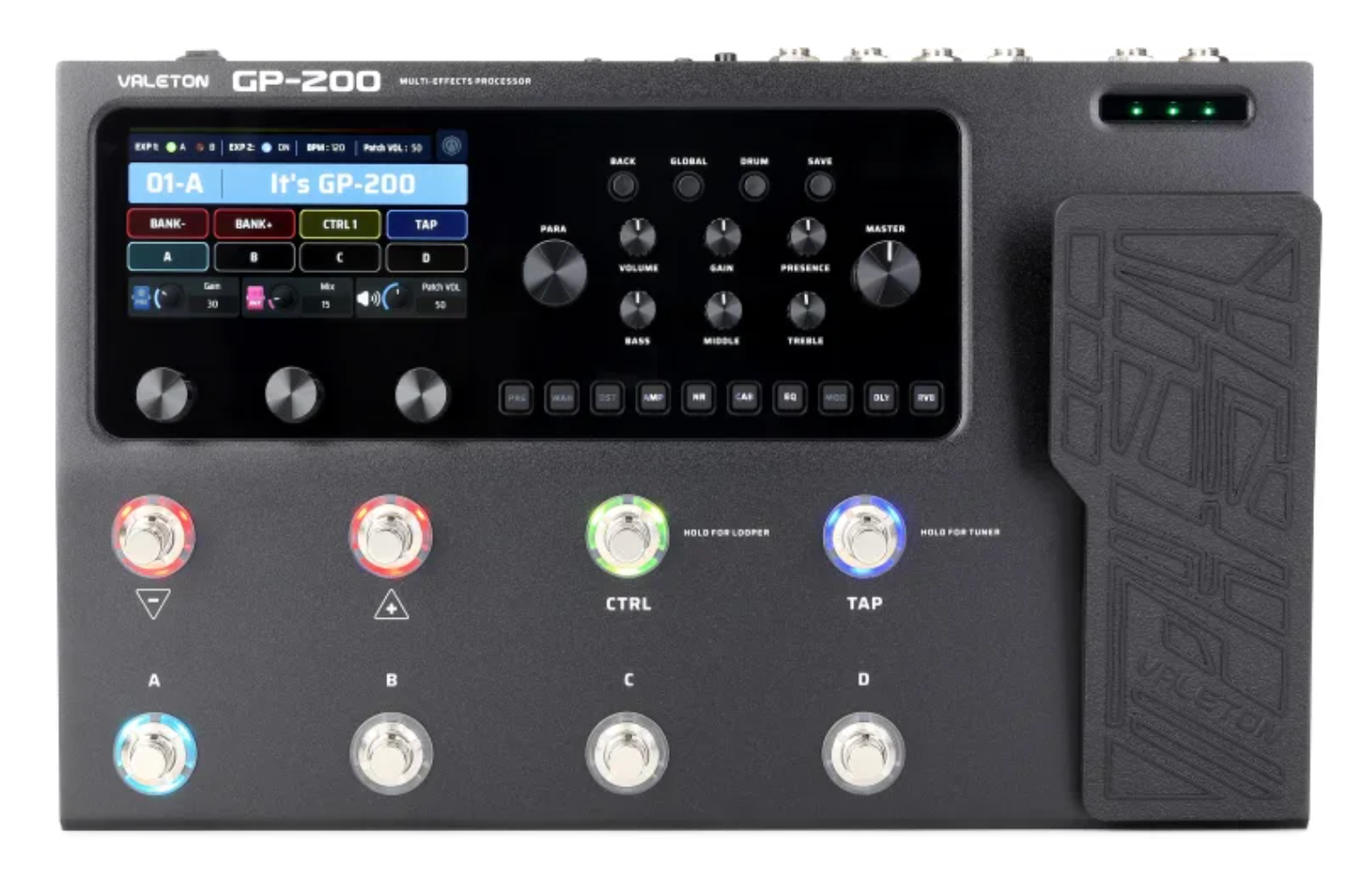
1. Valeton GP-200 - The Easiest All-in-One Benchmark
- Outputs: Dual balanced XLR outputs + dual 1/4" outputs.
- IR Capabilities: 20 dedicated user slots for 3rd-party acoustic IRs.
- Why it’s great for beginners: The Valeton GP-200 is built like a tank and features dedicated physical knobs for gain, EQ, and volume, making it feel like a standard amp rather than a computer, which is great for beginners, as it doesn't give you menu paralysis. You can easily turn off the electric guitar amp models, turn on your custom acoustic IR, and send a clean stereo XLR signal straight to the sound guy. Its built-in parametric EQ also makes it simple to dial out ringing feedback frequencies on stage.
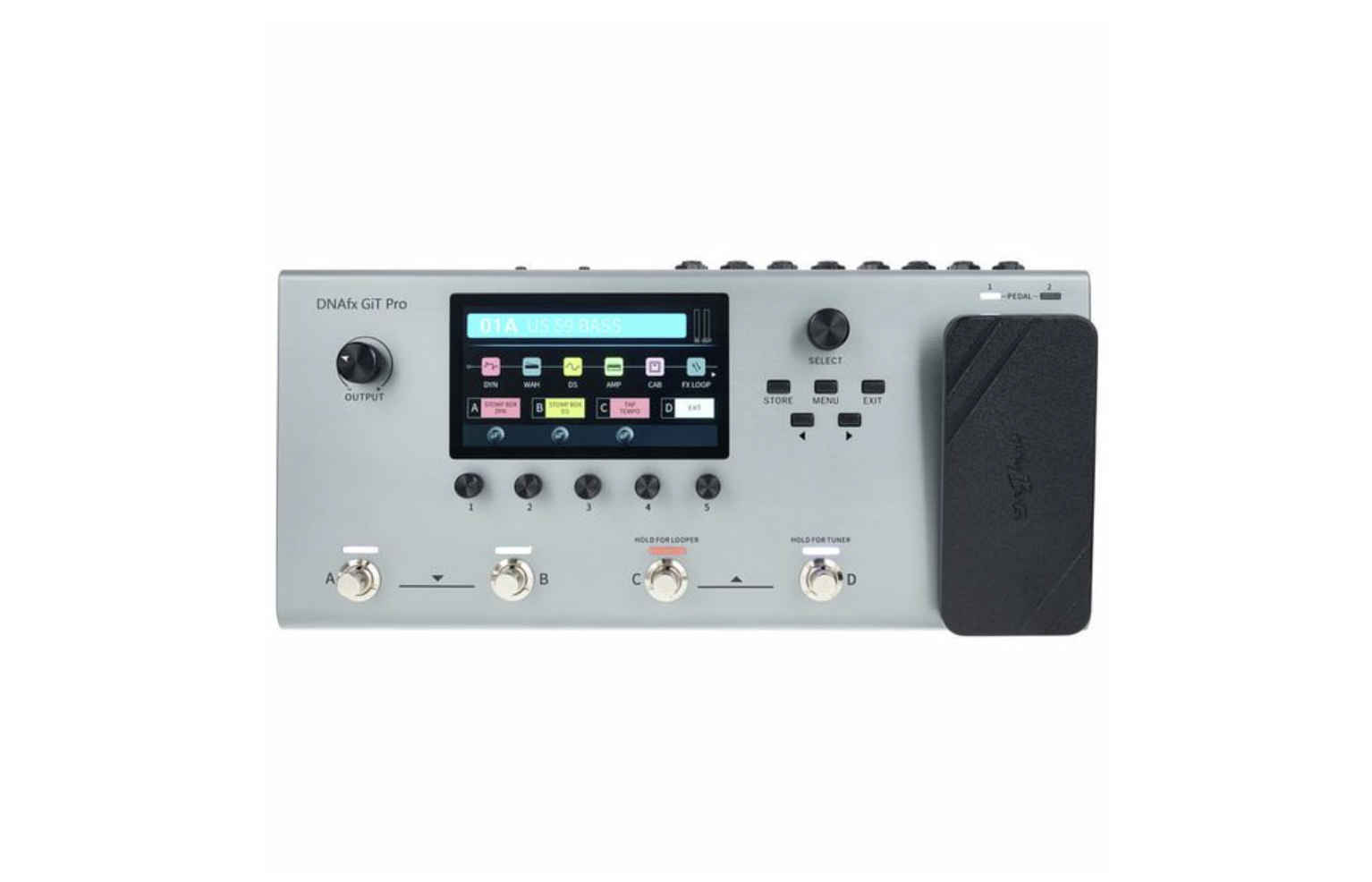
2. Harley Benton DNAfx GiT Pro - The Cheapest Path to Direct XLR, though only available in Europe
- Outputs: Dual balanced XLR outputs with ground lift switch + 1/4" outputs.
- IR Capabilities: Full 3rd-party
.wavacoustic IR support. - Why it’s great for beginners: Finding genuine dual XLR balanced outputs on a budget pedal is almost unheard of. The DNAfx GiT Pro gives you direct-to-PA connectivity without having to buy an external $50-$100 DI box. Its simple companion software lets you drag and drop free acoustic IR files directly into the pedal via USB. Its only issue is it's only available through its parent company's website: Thomann, which is arguable the best music retailer in Europe, but if you're in America... I don't know what to tell ya.
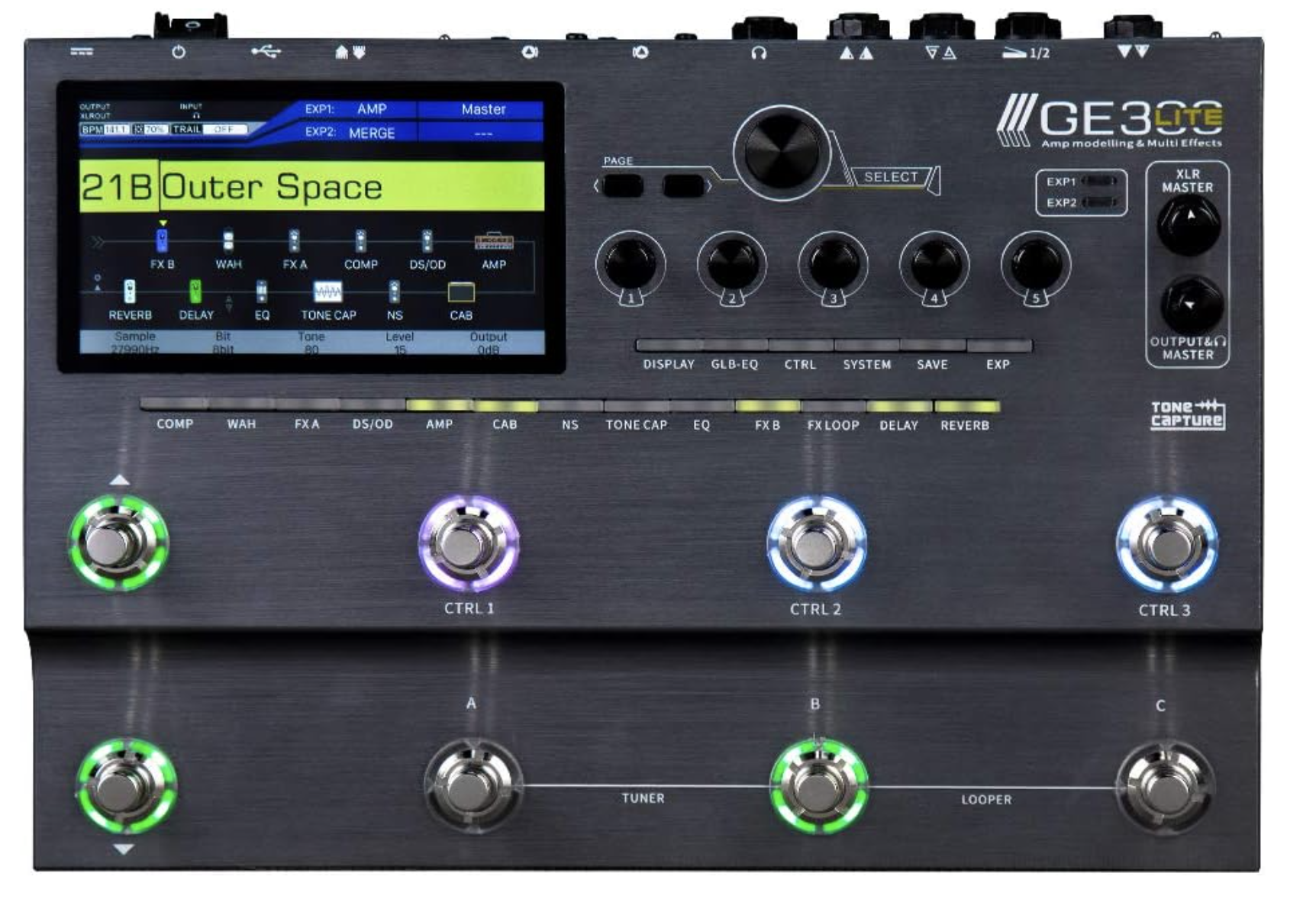
3. Mooer GE300 LITE - High-Detail Tonewood Realism
- Outputs: Dual balanced XLR outputs.
- IR Capabilities: High-resolution 2048-sample-point user IR support.
- Why it’s great for beginners: "Sample points" refer to how detailed an IR file can be. Higher sample resolution means the pedal captures fine acoustic details—like body wood resonance and room air—much better. The Mooer GE series allows budget-conscious players to access 2048-pt resolution, delivering noticeable string separation and realistic decay for fingerstyle guitarists. Its only problem is that it's hard to source.
Final Verdict: Which Pedal Should You Get?
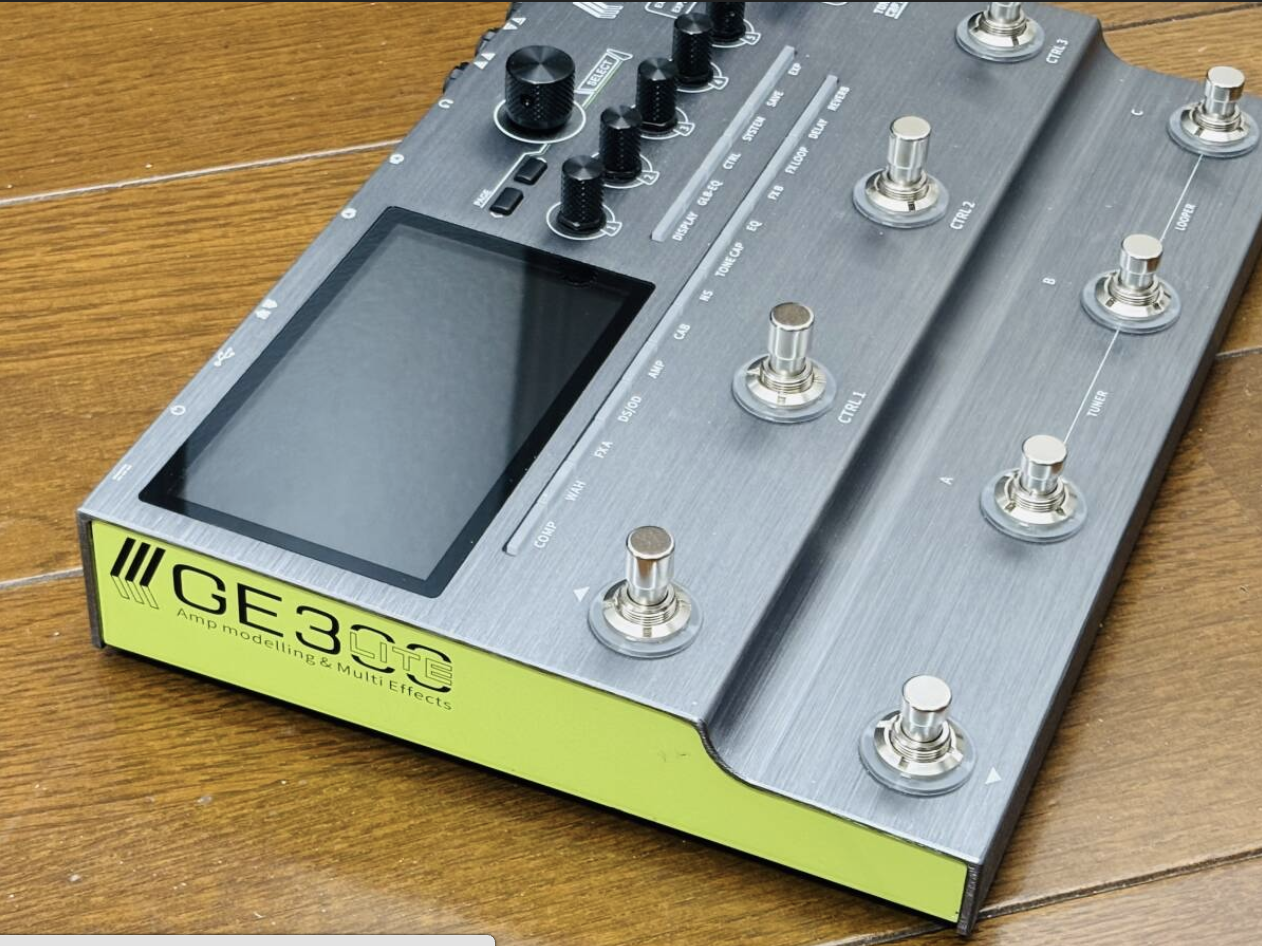
In my honest opinion, the easiest, most reliable gigging pedal is the Valeton GE-300 LITE. It has real knobs, stereo XLR outputs, and handles acoustic IRs effortlessly. Plus it's not the most expensive unit in this article.
But what if you're also a singer? Adding a vocal chain to your rig is the ultimate way to level up your sound. Check out my list of MultiFX pedals below!
 Adam Khan