Bose S1 Pro+ vs JBL EON One | Best Portable PA for Solo and Duo Acts

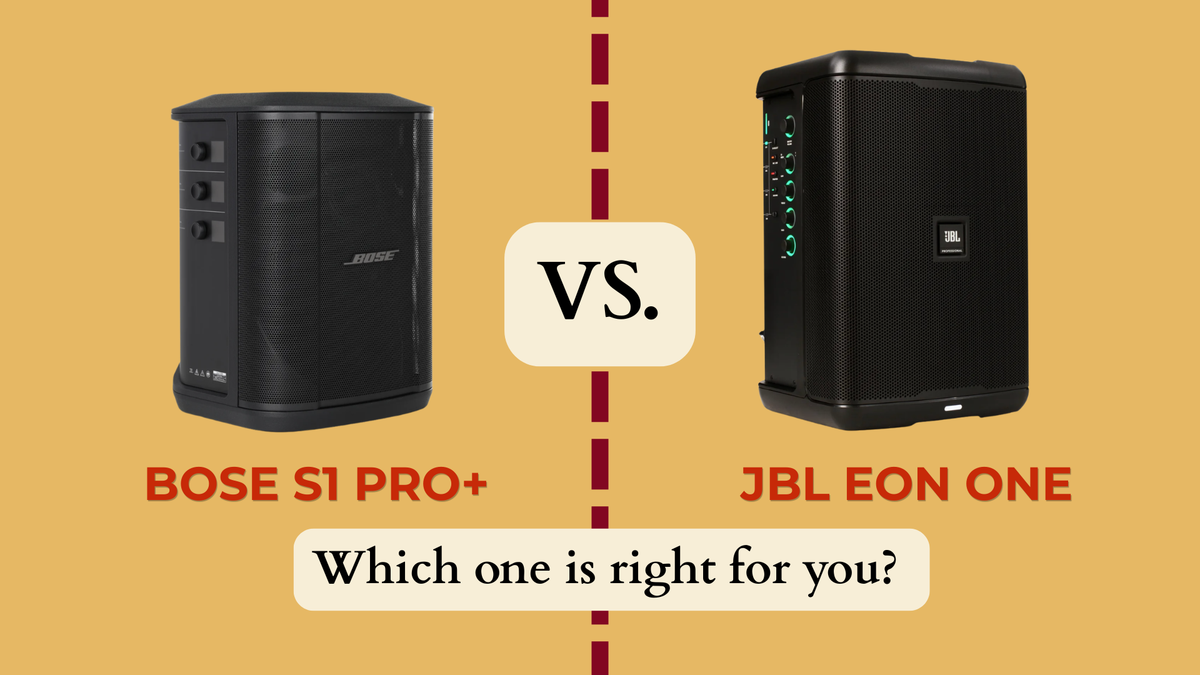
Gone are the days when small PA systems sounded no better than your 2000's school computer's monitors. The 2026 musician is spoilt for choice of amps that not only sound incredible, but are also easy on the back.
Today, I've compiled the two most popular small format PAs, the Bose S1 Pro+ and the JBL EON One Compact, both of which I've used extensively over the years, and I've outlined the differences between them, the similarities, and which I'd pick if I was in the market again for one of these units.
These amps work great with any instrument, not just guitars and vocals, because they offer a flat response and full range, so whether you play bass, keys, harp or guitar, these will sound fabulously for you.
Here's a little summary and an in-depth review below.
Form Factor: Weight & Stage Aesthetics
Portability and Weight
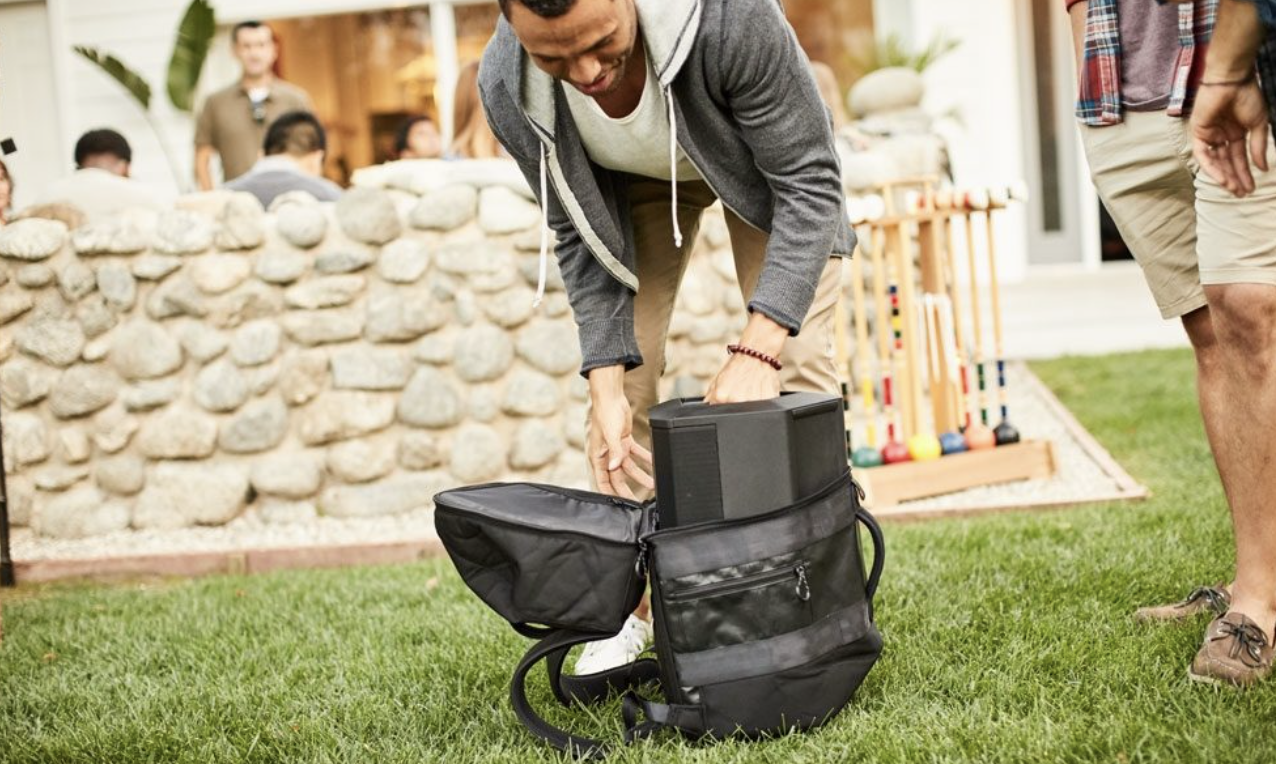
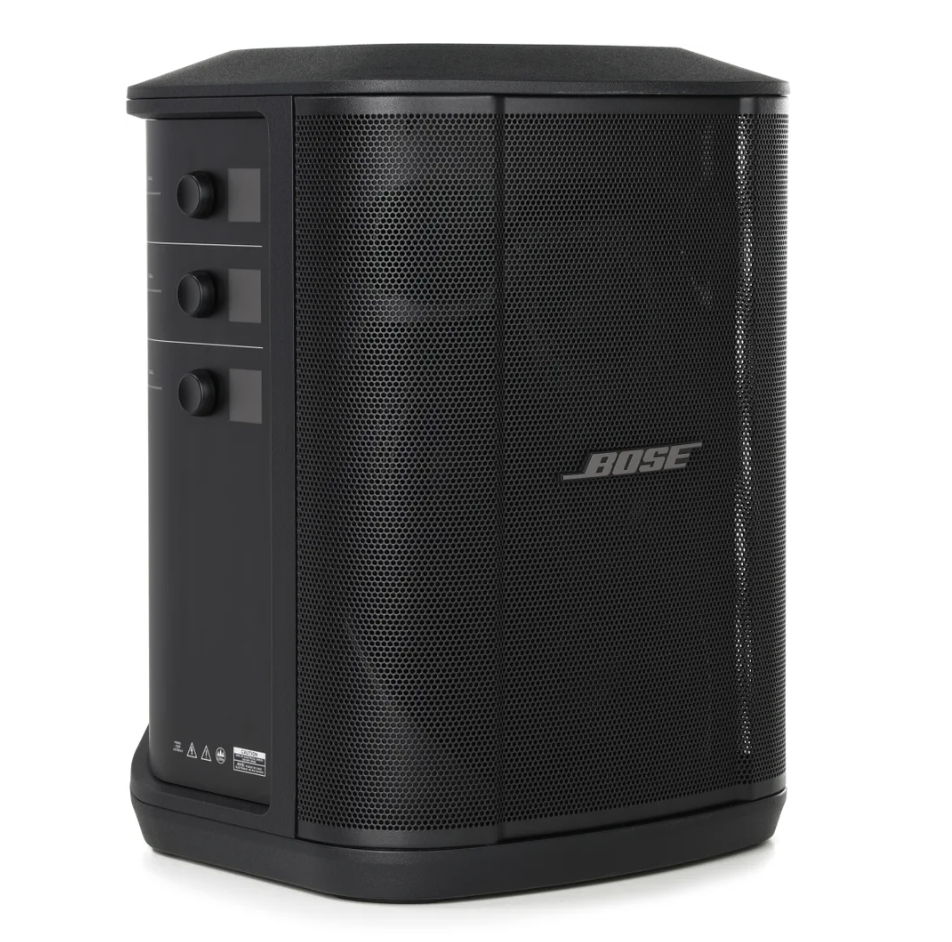
Both of these are surprisingly small when seen in person, smaller than online images let on as well. The Bose S1 Pro+ is ever-so-slightly lighter though, and it features a flexible, four placement options depending on whether you're using it as a main speaker or a monitor. The JBL however trades the heavier weight, with dedicated woofer area for improved low-end physical projection.
Stage Presence
Presentation-wise I would say both are very low-profile, though the Bose naturally looks more upscale, with a full metal lining and even being able to rotate the logo depending on its placement! Talk about attention to detail!
While the JBL EON One doesn't tilt, you can certainly place it as a monitor to hear yourself as well, the Bose is just unnecessarily fancier about it.
The Takeaway: Bose wins on weight and presentation.
Onboard Mixers, FX & Wireless Tech
Bose S1 Pro+: Wireless, with a price
Bose designed the S1 Pro+ around speed and zero-cable clutter, however, you're able to connect through jack and XLR like a normal PA as well.
- Integrated Wireless RF Bays: One of the standout features of the S1 Pro+ is its wireless transmitter docks, it's just unfortunate that you need to shell out an extra 100 bucks for them. The 2.4GHz wireless dongles for your instrument and microphone slide directly into the speaker chassis to charge between sets, it really is a great idea.
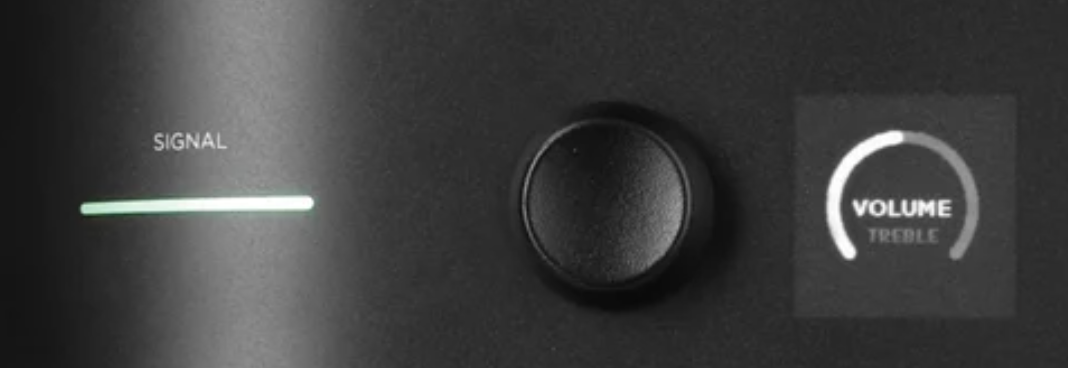
- OLED Color Displays: Each channel has a small, crisp OLED screen that changes function depending on how the speaker is physically positioned (floor monitor, tilt-back, or pole-mounted).
- Control Simplicity: You get basic Treble, Bass, and Reverb controls per channel. There are no deep sub-menus or 31-band graphic EQs—just plug in, dial in a quick balance, and play. The sound is good enough that you won't feel you need to tweak it too much anyway.
JBL EON ONE Compact Series: Work-Horse DSP
JBL took a full digital mixer engine from HARMAN’s pro audio lineup and crammed it into a battery-powered enclosure.
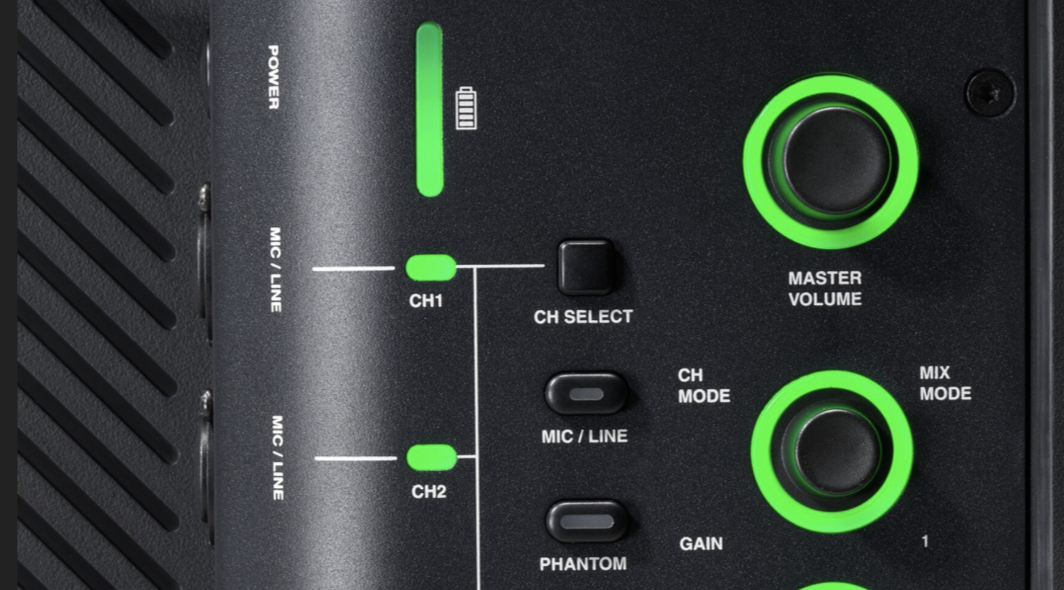
- 4-Channel Digital Mixer: You get two XLR/TRS combo inputs, a dedicated 1/4" Hi-Z instrument input, and a 3.5mm/Bluetooth aux channel.
- Pro Studio FX: Powered by Lexicon and dbx, the onboard DSP includes Reverb, Delay, Chorus, and dbx Automatic Feedback Suppression (AFS). If you play loudly in tight, reflective venues with glass or tile walls, the dbx feedback killer alone is worth the price.
- Deep App Control: The JBL Pro Connect app grants full access to 8-band parametric output EQ, individual channel EQs, and ducking features (which automatically lower music volume when you speak into the mic).
The Takeaway: While the hardware on the Bose is awesome, the fact that it's an extra purchase irks me the wrong way, especially when the slots are already built in. JBL wins on sound sculpting and acoustic problem-solving with its superior onboard DSP.
Acoustic Performance: Tone, SPL & Room Coverage
Acoustic Guitar & Vocal Clarity
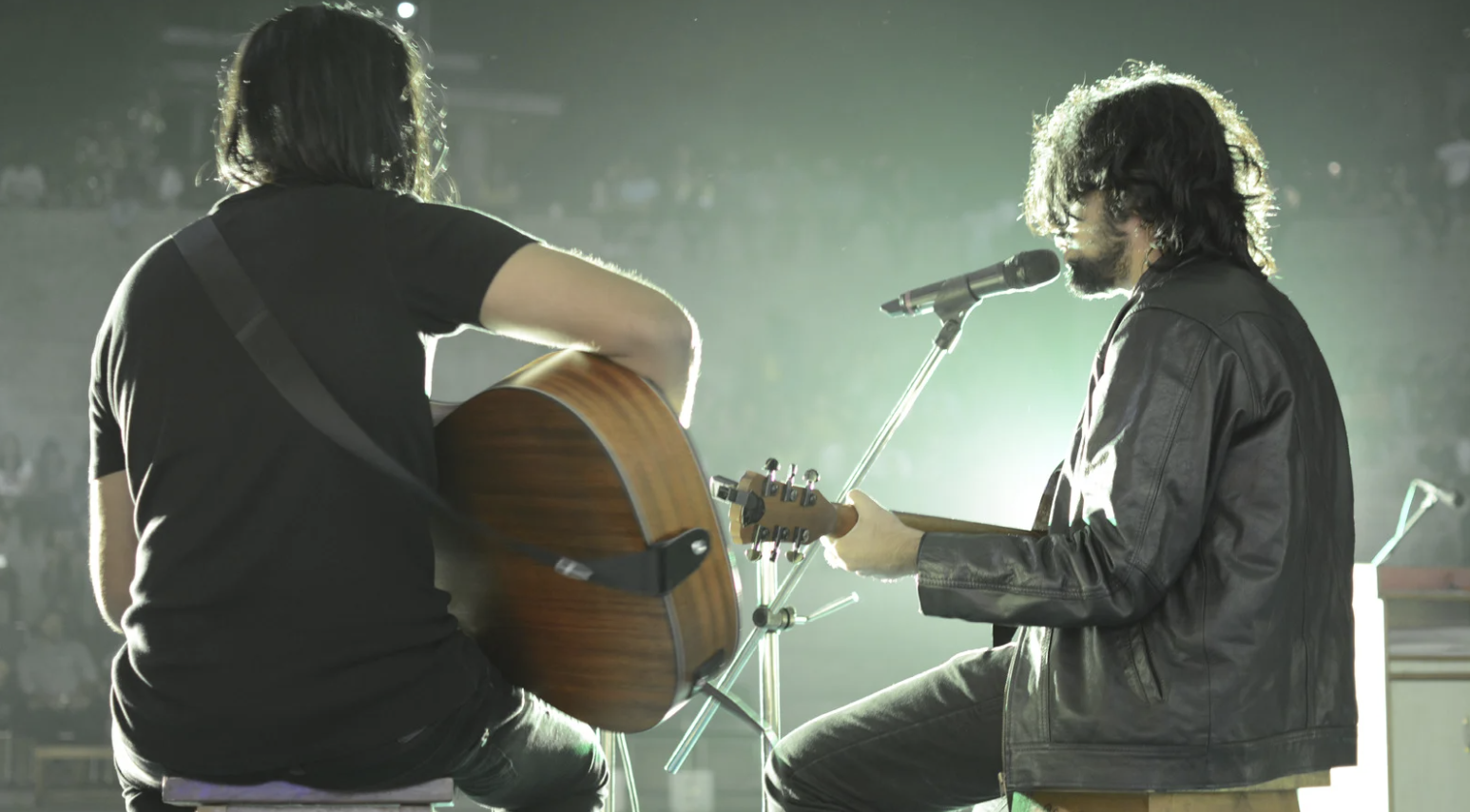
- Bose S1 Pro+: The sound out of this unit is rarely unflattering, it sounds crisp and professional, and the tweaks you're able to do on the sound, although limited, are enough to get the sound to an acceptable place. An acoustic guitar with piezo pickups plugged straight can sound harsh, so careful with the treble.
- JBL EON ONE Compact: JBL opts for an uncolored, flat-response studio monitor voicing. You will have to tweak it a little more, but it gives you the option to. I like it more because I'm able to customise the sound more depending on where I'm playing, which, when you have one of these amps, I assume you're playing in lots of different places.
Low-End Punch & Headroom (Max SPL)
- Bose S1 Pro+ (~103–109 dB Max SPL): While very articulate in small rooms, the Bose reaches its physical limit very quickly when pushed in loud, crowded venues, it's just not designed for it, I would say it can accommodate an event for around 50 people. If you run backing tracks, low-tuned guitars, or a cajon, the bass woofer begins to compress and choke at higher master volumes.
- JBL EON ONE Compact (112 dB Max SPL): With an 8-inch low-frequency driver that reaches down to 37.5 Hz, the JBL delivers significantly more physical low-end air movement and dynamic headroom. You can drive a duo set through the JBL at 80% volume without hitting the internal limiter. I like it more because I tune my guitar to Eb, and can really feel that extra "meat" in the low end on the JBL.
Dispersion & Room Coverage
- Bose: The articulated array provides wide 120° x 50° coverage, making it exceptional for wide, shallow coffee shops where audience members sit off-axis.
- JBL: Projects a tighter, direct beam that cuts through ambient room noise in narrow, deep spaces or noisy outdoor patio setups. It's more similar to a traditional PA.
The Takeaway: The JBL is more similar to a traditional PA in terms of power and dispersion, with some added modern features like the app to tailor the sound, and the Bose features a more modern, wide cone, which is better is entirely up to opinion. It's a tie.
Real-World Battery Life & Power Management
I don't generally take the performance of these amps seriously when unplugged, while I respect my fellow buskers, I'm not talking about these amps from a busking perspective here, but as a gigging musician who relies on power. But for the sake of thoroughness, here's a break down of battery performance:
Manufacturers always test battery life at background listening volumes. Here's what happens when you actually drive guitar and vocals at 75%+ master output on a Friday night:
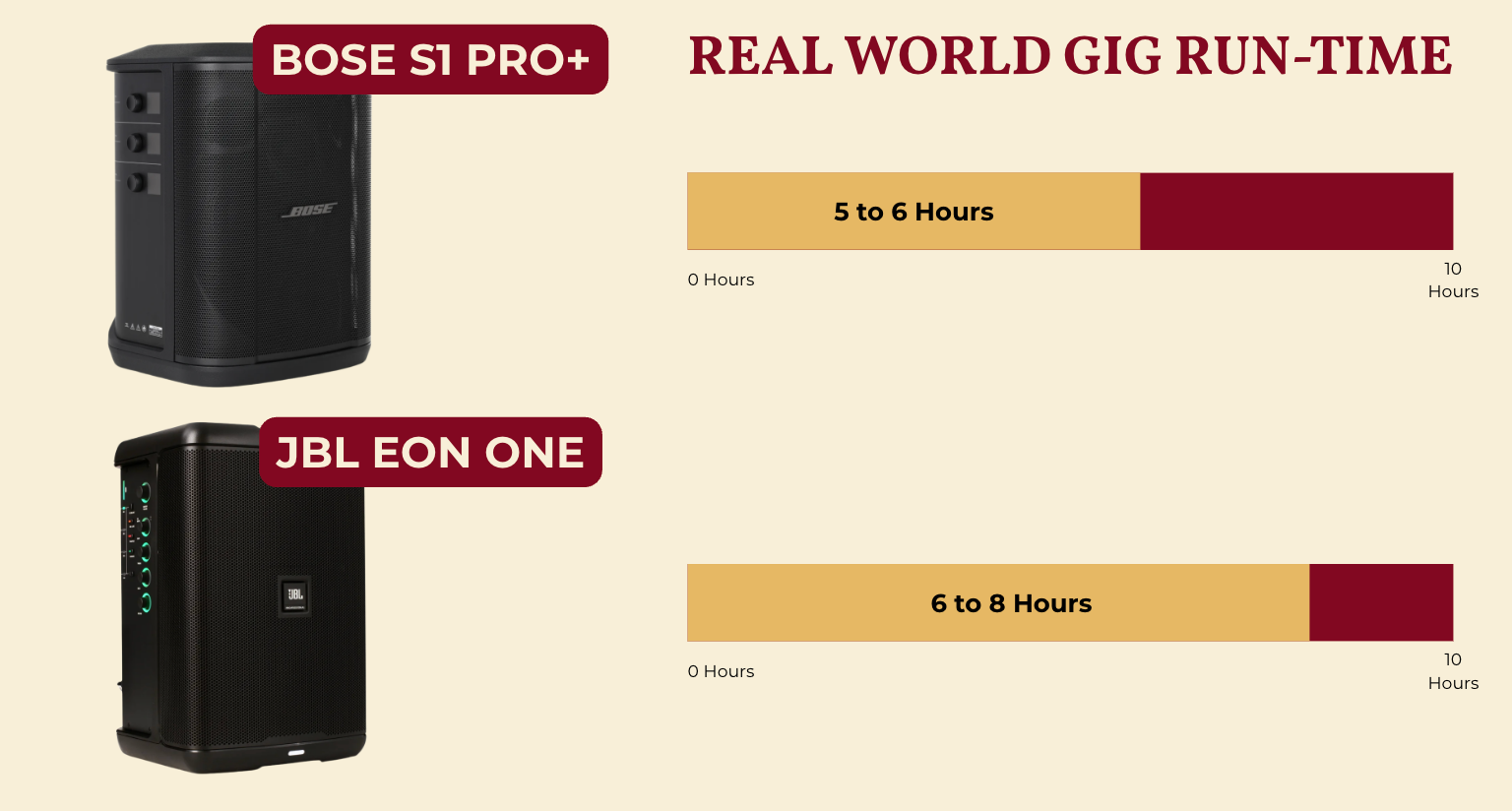
- Bose S1 Pro+: Claims 11 hours. In real-world gig conditions, expect 5 to 6 hours of performance, more than most of us will be gigging anyway. The battery is internal but accessible via a bottom door latch if you buy a secondary backup battery pack.
- JBL EON ONE Compact: Claims 12 hours. At high performance volumes, expect a solid 6 to 8 hours. The JBL has a toolless, rear-panel battery door that allows you to swap in a fresh battery in under 10 seconds without turning the unit upside down.
- Pass-Through Charging: The JBL features two high-speed USB 3.0 ports to charge your phone, iPad, or wireless receiver during a long 4-hour performance. The Bose includes USB charging for accessories as well.
The Verdict: Which One Should You Buy?
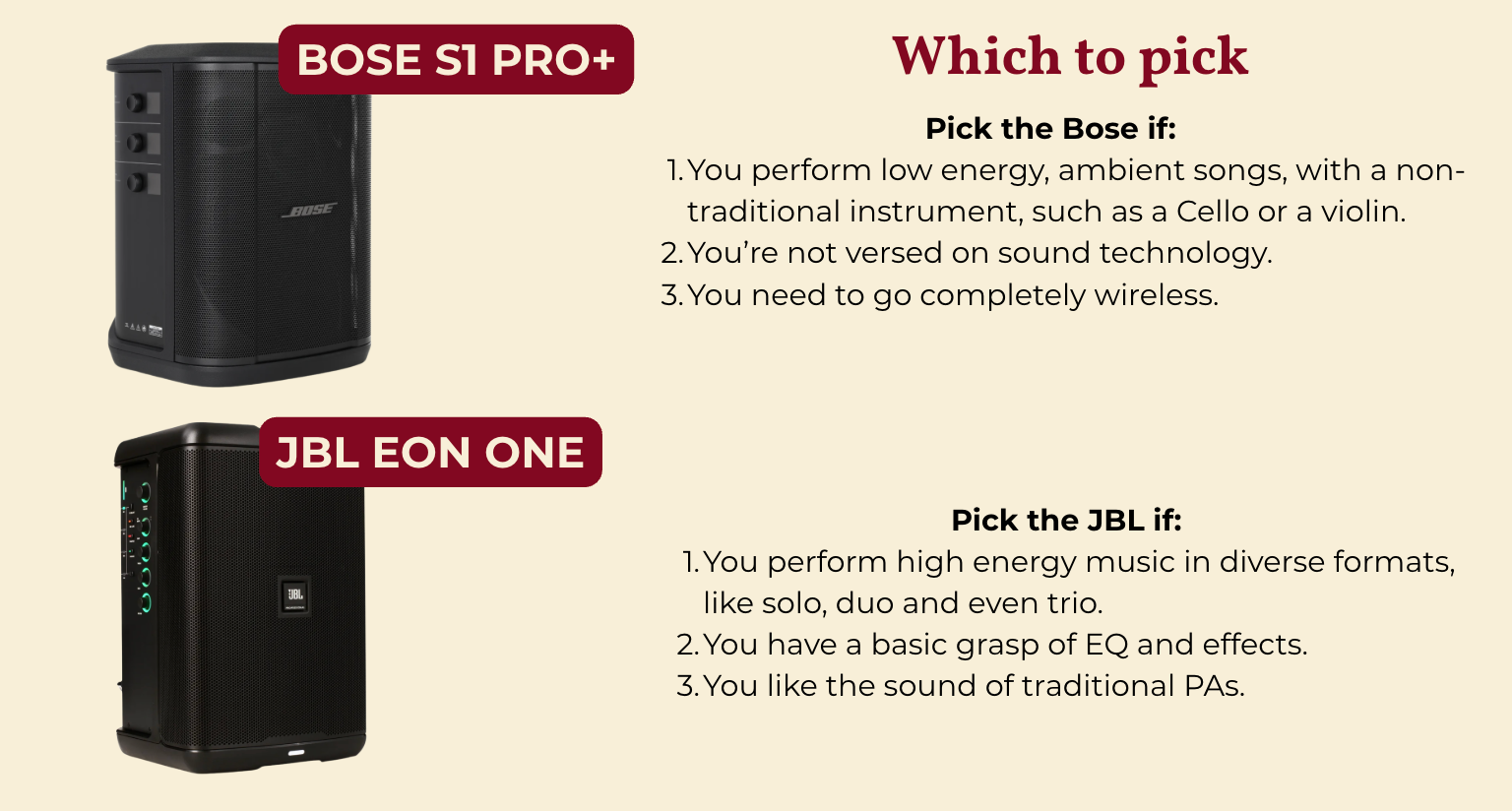
Buy the Bose S1 Pro+ if:
- You value rapid setup time above all else: Paired with the optional wireless transmitters, you can set up the speaker on a stand, plug in a wireless guitar/mic dongle, and be performing in under 60 seconds with zero cable clutter.
- Your gig footprint is primarily quiet/intimate venues: For solo acoustic singer-songwriters playing wine bars, art galleries, and wedding ceremonies, the Bose's wider dispersion and warm default voicing are unmatched.
- Weight is a major factor: At just 14.4 lbs, it is effortless to carry alongside a guitar case on public transport or across large event venues.
Buy the JBL EON ONE Compact if:
- You need high volume and punchy low-end: If your set relies on backing tracks, percussive acoustic playing, cajon, or synth bass, the 8-inch driver and 112 dB output headroom of the JBL blow the Bose out of the water.
- You play acoustically challenging or noisy rooms: The onboard dbx Automatic Feedback Suppression and 8-band parametric EQ give you the professional tools required to tame boomy, reflective venues.
- You perform as a duo or small group: The 4-channel digital mixer allows you to run two vocals, an acoustic guitar, and a backing track setup without lugging an external mixing console.
My Choice
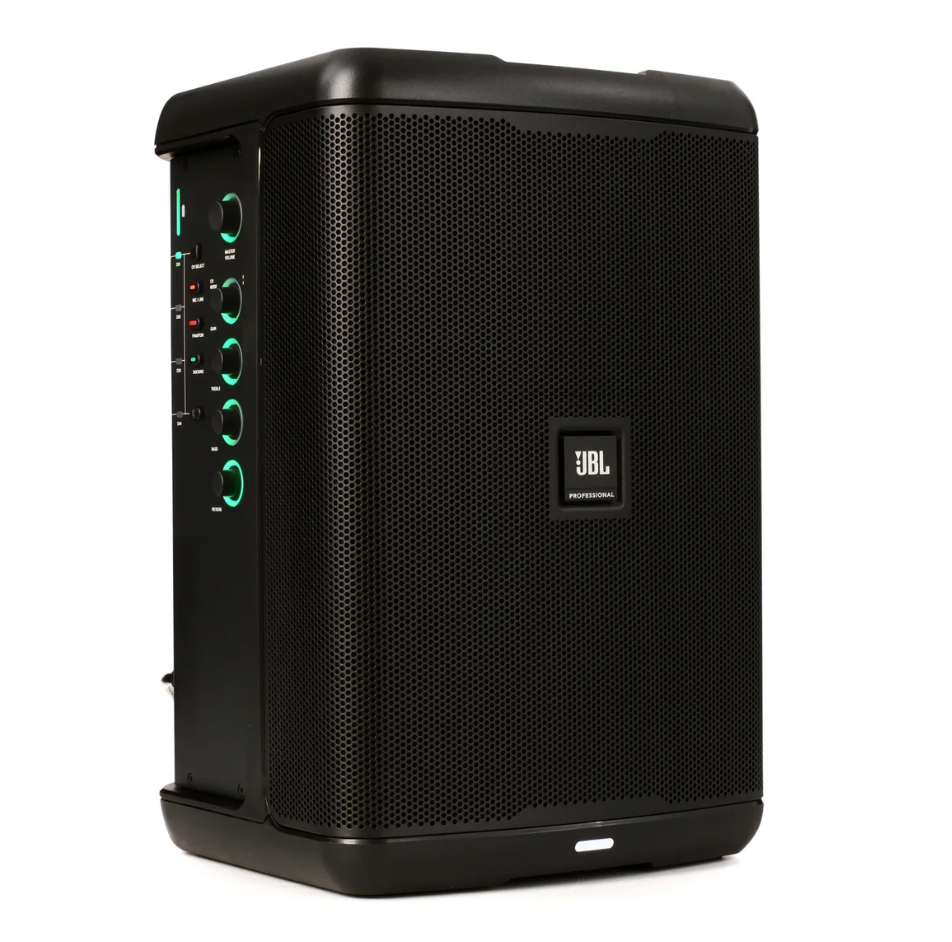
With my Eb-tuned Martin and high energy sets, I would pick the JBL EON One every day of the week. Call me old fashioned, but I don't trust wireless gear nearly as much as wired, especially when it's so expensive too, so plugging into a venue and plugging my guitar into the PA will always be preferred for me. The low end energy of the JBL also complements my performance style better.
That being said, I love playing through the Bose as well, do not misunderstand or regret your purchase. The main takeaway should be that you should try to experiment with both and see which adapts best to your playing.