How to Get Studio-Quality Acoustic Guitar Tone on Stage without a Mic


One of the worst cases of acoustic feedback I ever saw was from my friend David, who plugged a mic into his AER amp and faced it towards his acoustic guitar. While I understand that nothing sounds better than a mic'ed up acoustic guitar, it's unfortunately too unreliable a method if you're gigging in different places every week.
David ended up plugging his Taylor into his AER amp and surprise surprise, it sounded like the siren's song from the Odyssey. The tone we want but most can't have. This is only because that amp is incredible though, and not within most people's budgets.

Can't I Just Plug the Guitar Into the Mixer?
Yes... However, 99% of undersaddle piezo pickups sacrifice that lush, rich acoustic tone we love, for much needed volume and feedback resistance, this gives you the dreaded "piezo quack".
But what if you could have your acoustic cake and eat it?
Building a high quality acoustic guitar tone live through a direct line without using any microphones requires six key elements.
1. Implement Acoustic Impulse Responses (IRs)
Acoustic Impulse Response (IR) technology is the single biggest breakthrough in live acoustic tone over the last decade. An Acoustic IR is a digital snapshot that calculates the acoustic difference between your pickup's raw signal and a studio microphone placed in front of a high-end acoustic guitar.
When you pass your pickup signal through an Acoustic IR loader pedal or multi-FX unit:
- It restores the wood resonance, and mic placement detail stripped away by the undersaddle piezo pickup.
- It eliminates the plastic, harsh transient spikes associated with direct signals.
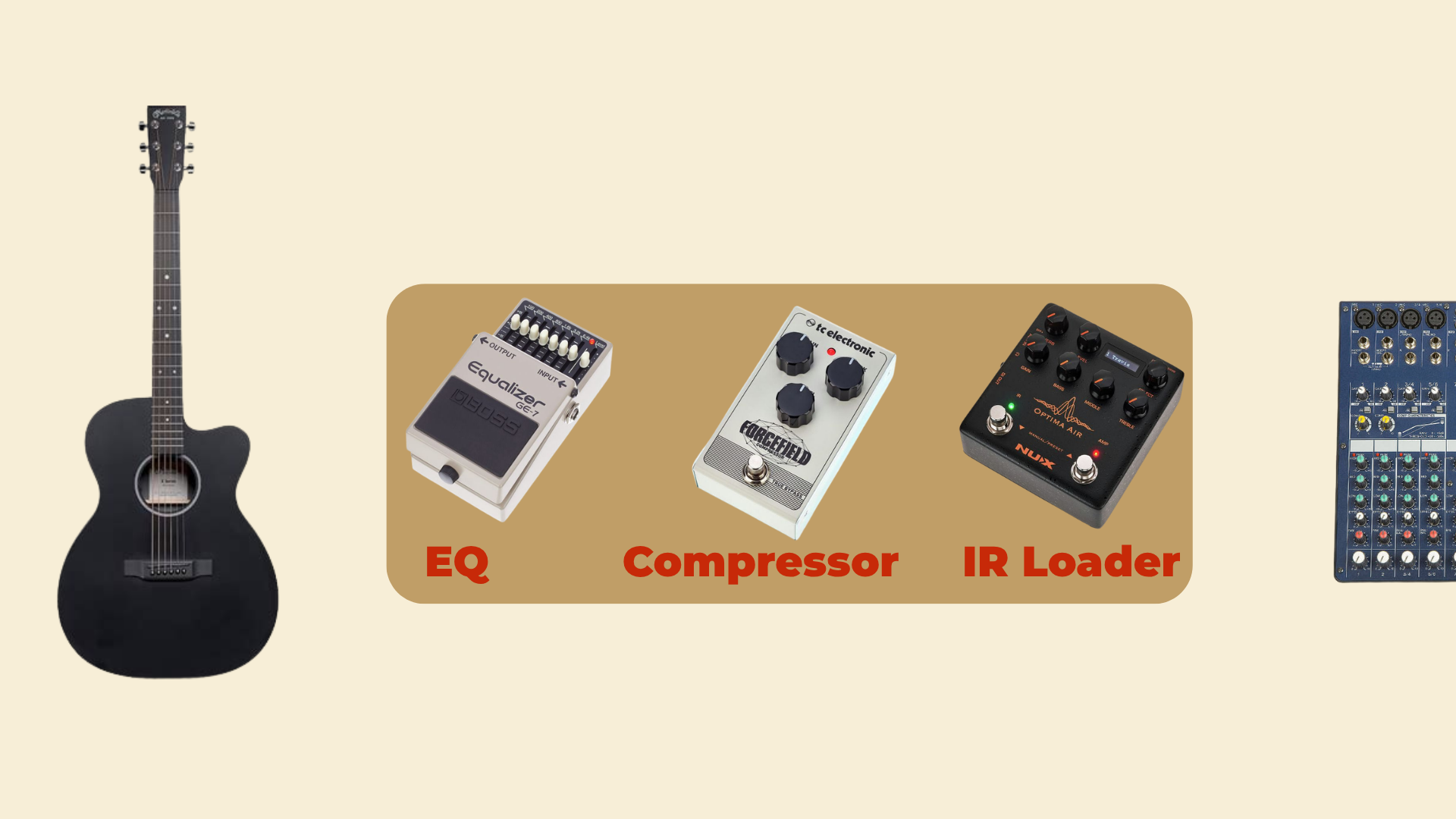
Dedicated hardware units like the L.R. Baggs Voiceprint DI, ToneDexter, or even standard IR loaders in modern multi-FX processors allow you to create custom IRs of your exact instrument or load pre-captured studio profiles. And finding 3rd party IRs is incredibly easy nowadays as well. Check out Tone3000.com just for a peak.
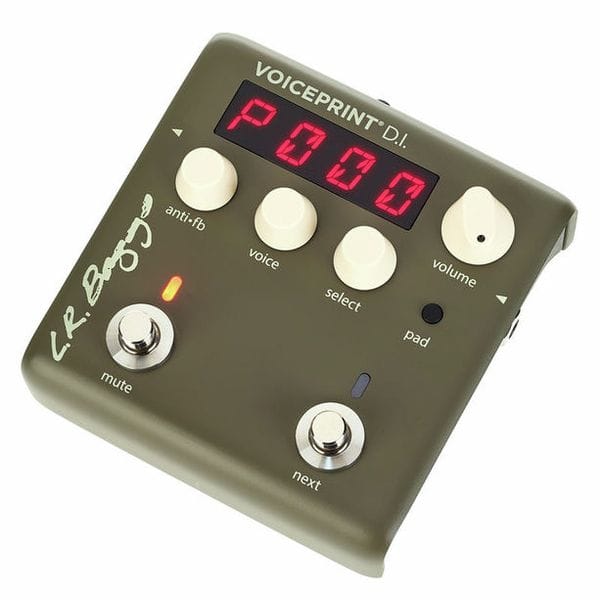
Best Sounding: L.R Baggs Voiceprint
An outstanding sounding pedal, hurt only by the fact that it doesn't have a compressor and reverb integrated. Otherwise, this would be my go-to pedal.
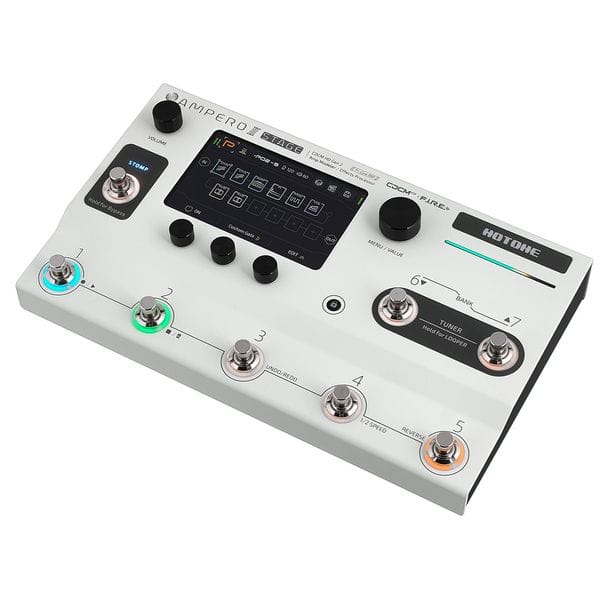
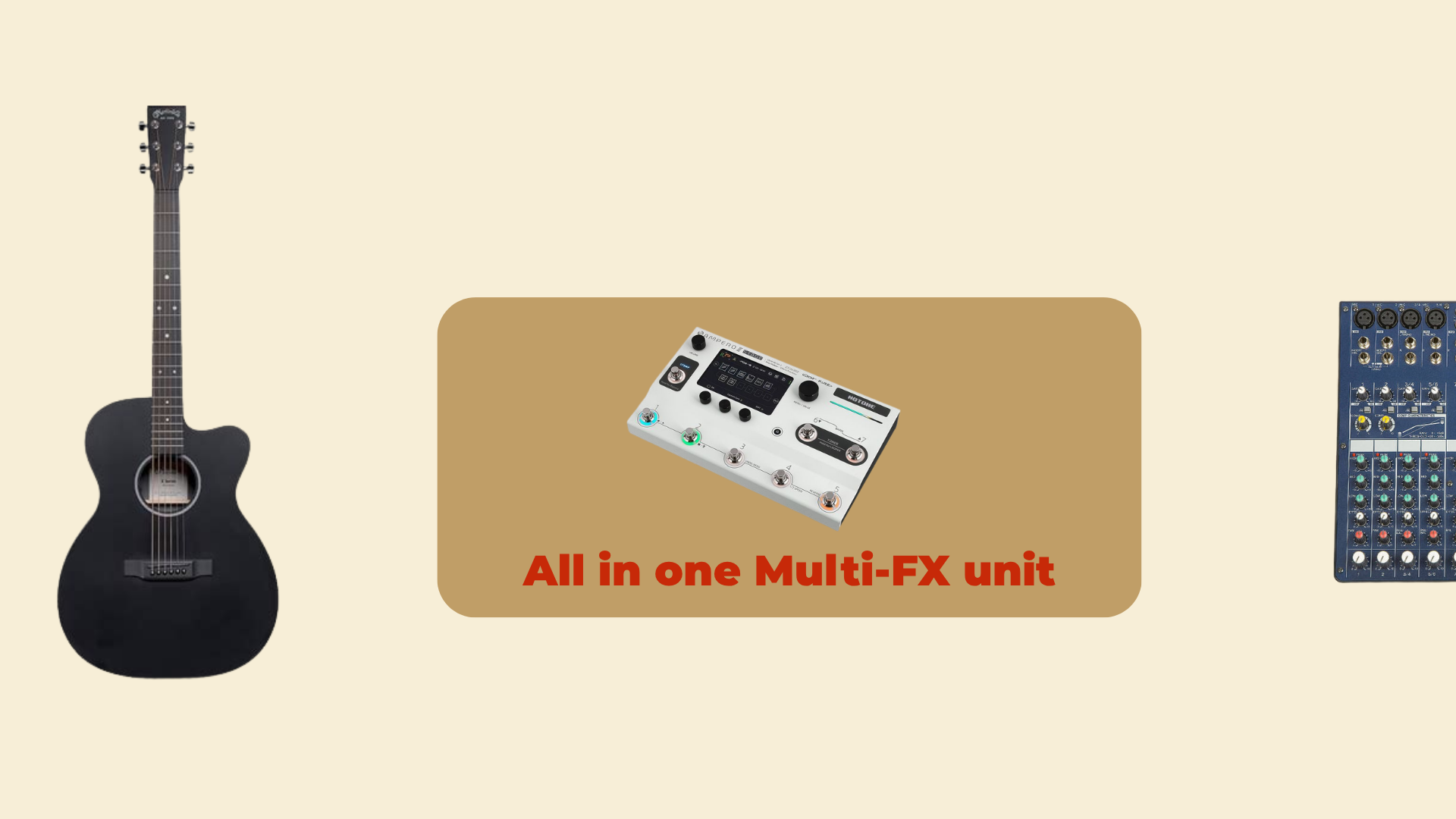
What I Ended Up Choosing: Hotone Ampero II Stage
IR profiles will sound the same on every single unit, you just need to get a unit that supports loading them. For me, choosing a unit that not only can load IRs, but can create entire signal chains with EQs, Reverbs and Compressors, and send it out through a balanced XLR cable is game-changing. This is the only pedal I take to gigs nowadays.
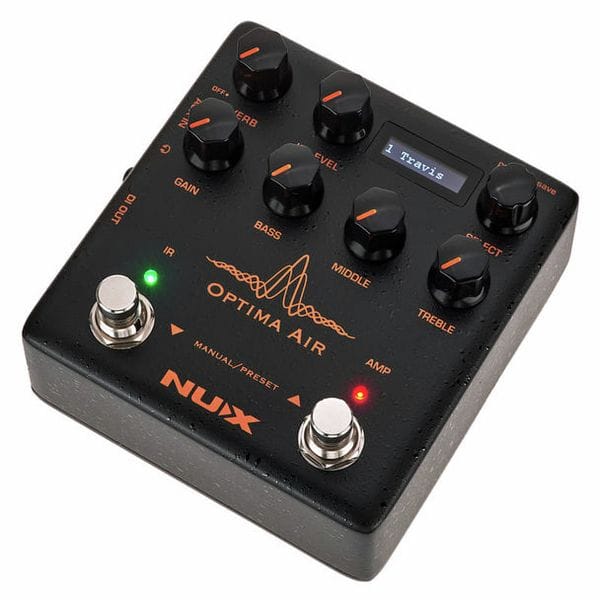
Budget Option: NUX Optima Air
The preloaded IRs on this pedal are phenomenal, and better than a lot of the premium options you'll find around. This, paired with a lush acoustic reverb, preamp, and XLR output make it one of my favourite acoustic pedals ever.
2. Upgrade to a Dual-Source or Soundboard Pickup System
The standard undersaddle piezo pickup senses string pressure directly beneath the bridge saddle. It captures string attack well, but completely misses the body resonance of the guitar top and body.
To capture wood and air without a microphone, use a dual-source setup:
- Soundboard Transducers (SBTs): Systems like the K&K Pure Mini attach directly to the bridge plate inside the body. They capture the natural vibration of the wooden soundboard rather than raw string pressure, yielding a warmer, organic base tone.
- Dual-Source Hybrid Systems: Pickups like the L.R. Baggs Anthem or Fishman Rare Earth Mic Blend combine an internal element (piezo or magnetic) with a noise-canceling internal condenser mic or body sensor. Low frequencies are routed through the stable pickup, while high-frequency detail comes from the internal sensor, minimizing feedback while keeping air in the signal.
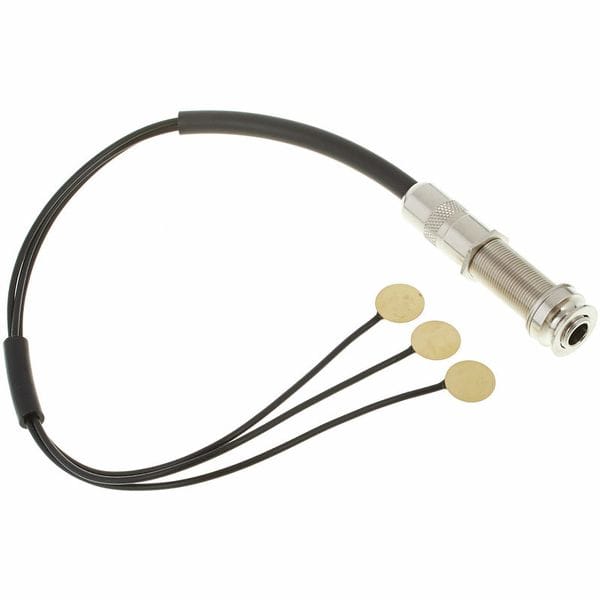
K&K Pure Mini
Combining the precision of a piezo pick up, with the resonance of this, is pure magic. It's a more complicated set up but one that is worth doing if you're playing higher tier gigs.
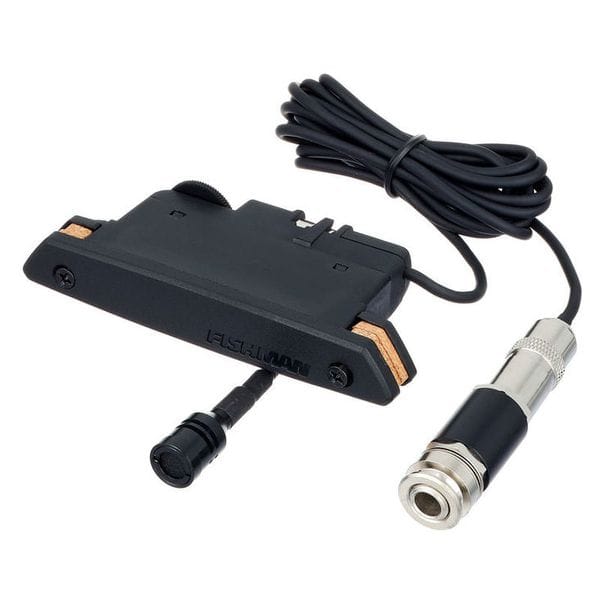
Fishman Rare Earth Preamp
One of the best sounding magnetic pickups out there, with an integrated condenser mic, built to withstand feedback. Pricey, but a great all in one solution.
3. Apply Surgical EQ and Filtering
An acoustic guitar needs aggressive frequency management when running direct to prevent boominess in the low end and harshness in the upper mids.
- High-Pass Filter (HPF): Set an HPF between 80 Hz and 100 Hz, depending entirely on the dimensions of your guitar. Sub-bass frequencies in an acoustic guitar carry no musical value and only cause low-end rumble, muddying the mix and triggering low-frequency feedback and hum.
- Targeting the "Piezo Quack": Sweep a narrow parametric EQ cut between 2.5 kHz and 3.5 kHz. This frequency band is where direct pickups sound harsh, brittle, and overly artificial. A subtle 3 dB to 5 dB notch in this range instantly smoothes out the top end.
- Taming Body Boom: If playing in a reflective room, cut a wide bell curve around 200 Hz to 400 Hz to remove boxiness and clear space for vocals or other instruments.
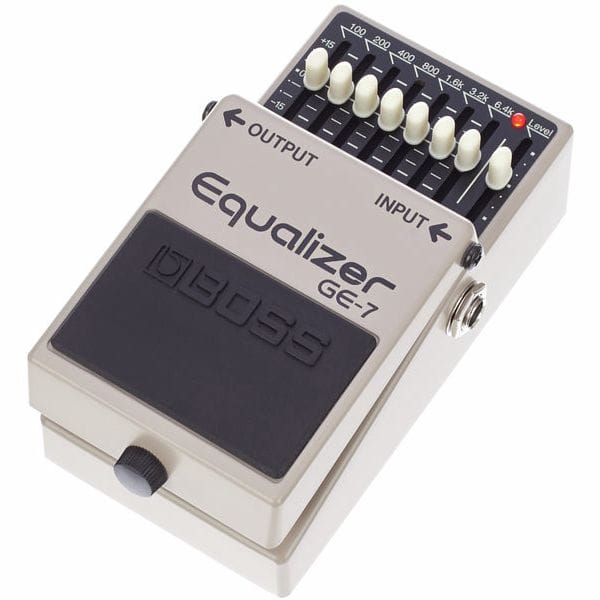
The Obvious Choice: BOSS GE7
Literally all of those tweaks I describe above can be done with the humble GE7. This thing to be honest should be in every guitarist's arsenal, whether they play fingerstyle americana or death metal. I will write a deep dive on just why it's so essential.
4. Tame Peak Transients with Subtle Compression
Acoustic instruments produce sharp, unpredictable dynamic spikes—especially when switching from fingerpicking to aggressive strumming. In a studio, natural air absorption and optical compressors smooth these spikes out.
On stage, run a fast, subtle compressor early in your signal chain:
- Ratio: Keep it low (between 2:1 and 3:1).
- Attack: Set a medium-to-fast attack to catch hard pick attacks without squashing the natural dynamic envelope of the note.
- Release: Set a moderate release time to ensure the natural sustain of the note isn't artificially choked.
- Goal: Aim for no more than 2 dB to 4 dB of gain reduction on peak strumming. This keeps the signal level consistent for FOH without killing your expressive dynamics.
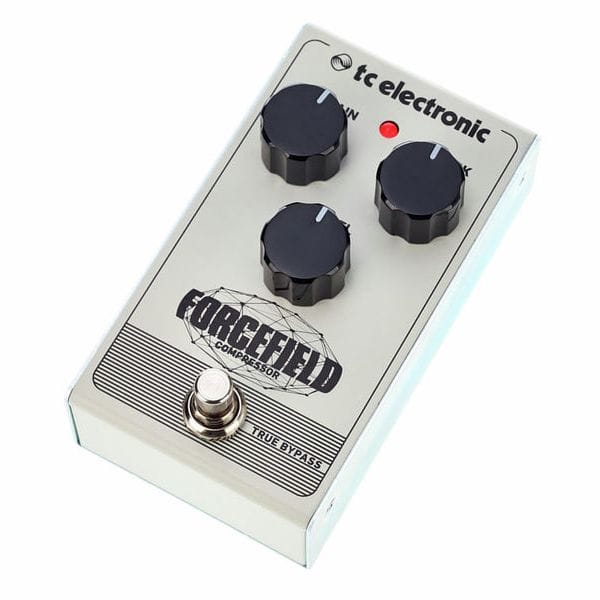
Cheap and Good Enough for Acoustics: TC Electronic Forcefield
We acoustic guitarists are less fussy about compression. A budget pedal like this one, which I personally used for 3 years, is good enough for us.
5. Recreate Natural Room Air with Reverb
A direct acoustic guitar signal feels unnaturally close and dry because it lacks the natural room reflections captured by a studio mic.
The human ear is a tricky judge. If you don't artificially add reverb to a live mix, the guitar will sound dry, and counterintuitively, artificial. The human ear expects there to be natural reverb in everything we hear, so not hearing it makes us feel like there's something unnatural going on.
Adding short, high-quality room or plate reverb restores this space, but unmanaged reverb on acoustic instruments leads to a washed-out mix. This can be done either on your multifx, a separate pedal, or on the mixer itself, as this is the most common effect you'll find on even the most budget options a venue can buy.
6. Send a Low-Noise, Balanced XLR Signal to the Mixer
To really finalize the rig, never send a raw 1/4" (TS) instrument cable directly into a venue's stage box or mixer. Instrument cables carry an unbalanced, high-impedance signal that acts like a giant antenna for electromagnetic interference, neon light buzz, and radio frequencies. Over cable runs longer than 15 feet, unbalanced signals rapidly lose top-end clarity and are prone to ground-loop hum.
Switching to a balanced, low-impedance XLR connection uses two signal conductors and a shield to cancel out noise via common-mode rejection. This guarantees a dead-silent, studio-grade signal whether you are 10 feet or 150 feet away from the front-of-house (FOH) console.
Depending on the brain of your rig, here is how to route your balanced output:
- Integrated Multi-FX Units: Modern, high-end multi-FX processors designed for live performance, like the Hotone Ampero II Stage, Line 6 Helix and Quad Cortex, feature XLR outputs as standard.
- Acoustic Preamps & Dedicated IR Loaders: High-end acoustic processors and IR loader pedals like the L.R. Baggs Voiceprint DI, Fishman Aura, NUX Optima Air) include a dedicated, transformer-isolated XLR DI outputs. These usually feature a Ground Lift switch to eliminate ground loops caused by dirty venue power, and a Pad switch to prevent hot signals from clipping the soundboard’s mic preamp.
Combining a dual-source pickup with an Acoustic IR, high-pass filtering, light peak compression, and subtle room reverb delivers a direct signal that sounds basically indistinguishable from a studio mic session, with zero feedback risk, complete volume control, and absolute reliability on stage.
So you've upgraded your system and booked a small gig! What is the best set up for small venues? Find out in the article below.
 Adam Khan