The Ratatouille Effect: The Shared Biology of Music and Food

Vietnamese cuisine is without a shadow of a doubt one of the best in the world. I've eaten out here for a year, and I simply cannot get enough, in fact, I'm constantly shifting between favorite dishes, although the title is sitting quite firmly on Bún chả right now.

Just as I thought I had everything I needed here, I walked to a grocery store near my house in District 7, which specializes in foreign products, just for curiosity, and there they were... A stack of La Costeña refried beans cans, right next to some tortillas and incredibly, some bottles of salsa verde. The sixteen-year-old Adam within me reached out, got some light cheese and bought them without even looking at the price, which as it turns out, was very much European.
Keep in mind, these products are also inexplicably hard to find in Portugal, where I lived for five years prior to flying to Vietnam. So it's not that I was missing this food, it's that my soul was yearning for it.
When I got home and cooked the quecas (affectionate name for quesadillas) with a tiny bit of olive oil, I could not get the smile off my face. Just cooking these ingredients put my memories of late hangouts with my best friends in my childhood house in Spain front and center.
And when I finally tried them... I didn't just remember, I got transported there. The textures of my old, wooden kitchen, the sound the extractor fan made, the view outside the window to the patio of my three dogs begging for some scraps, my friends sitting around the table discussing Warhammer and Star Wars. I was there.
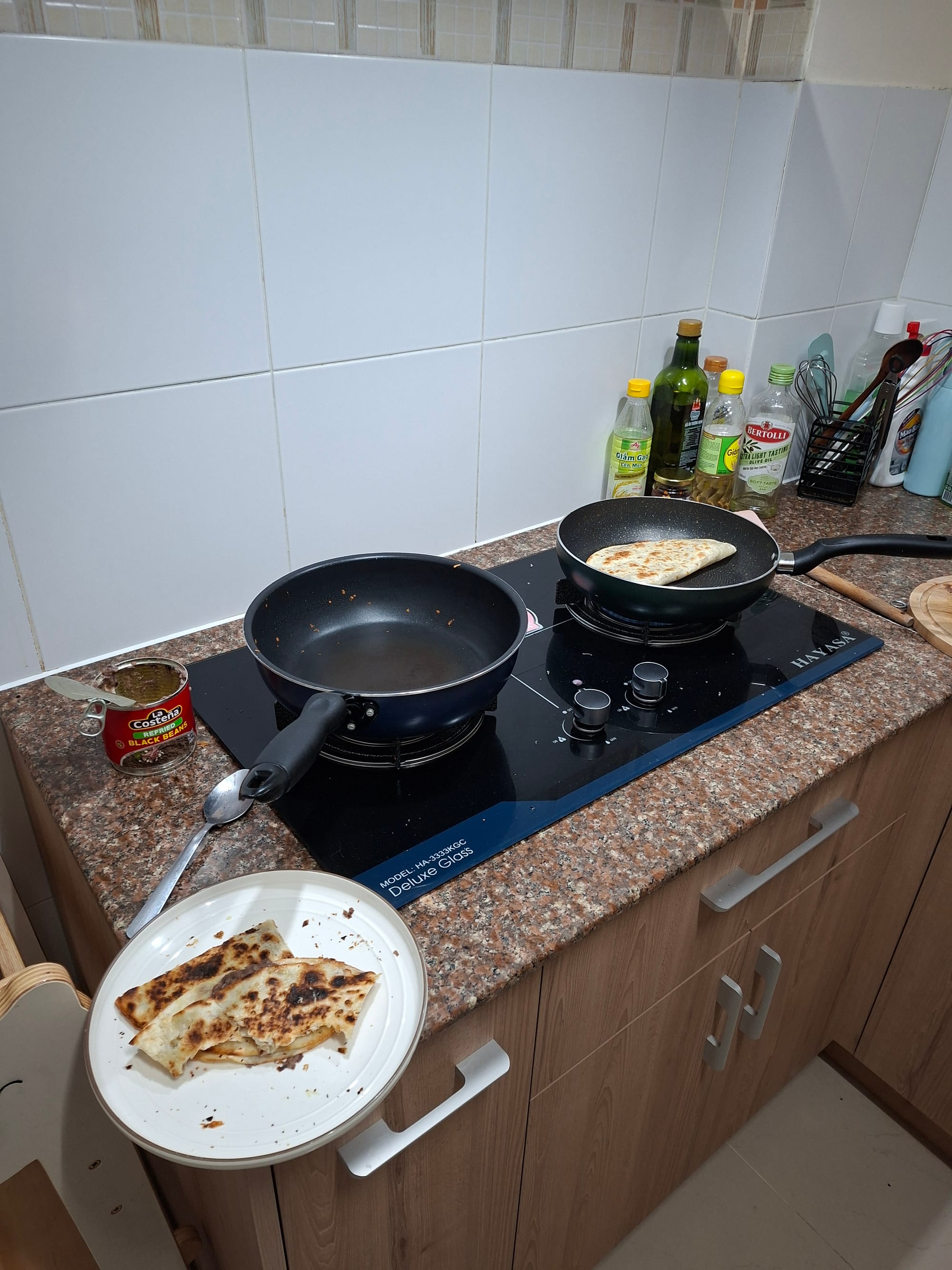
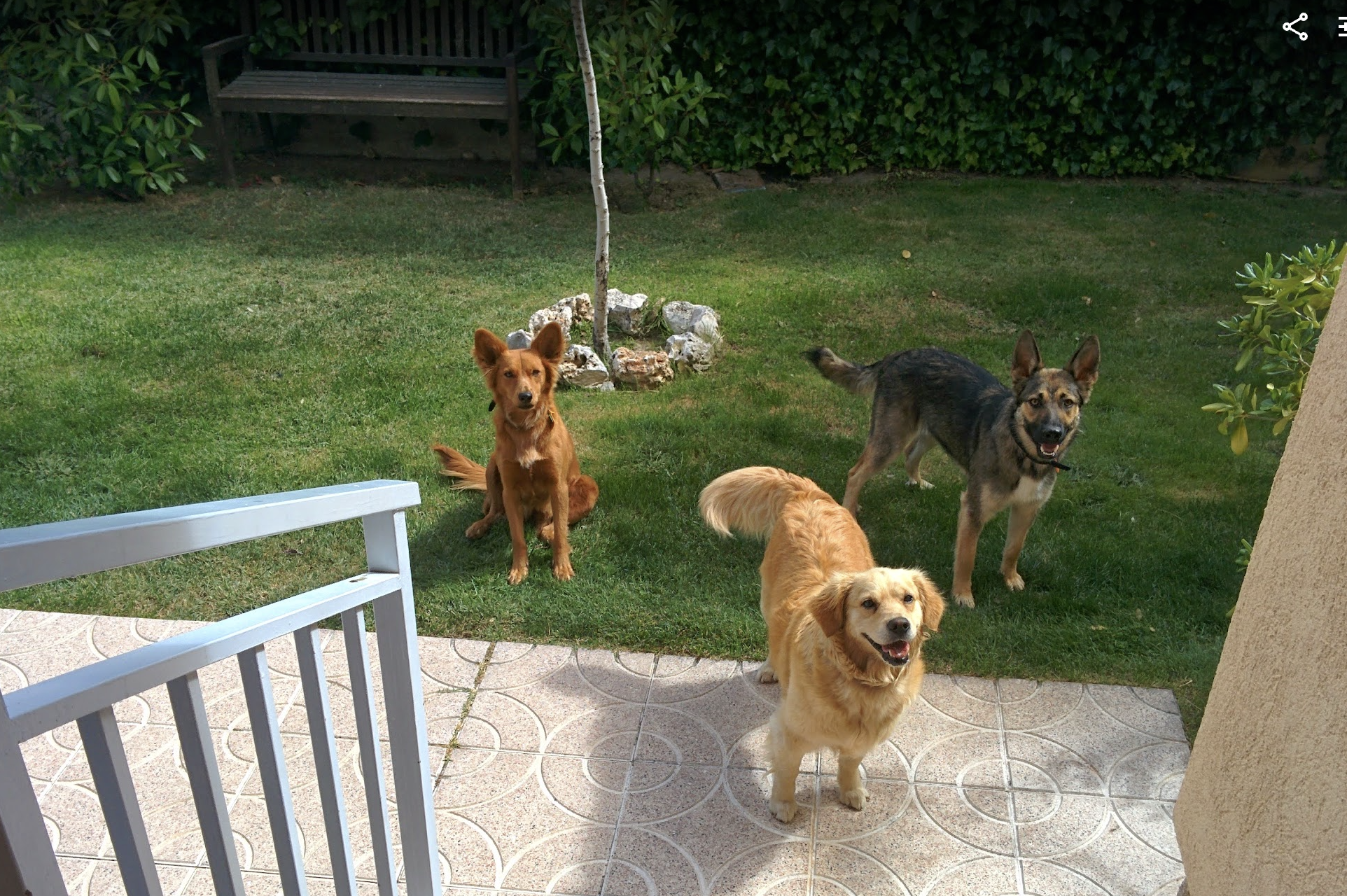

Photos: Left, my messy kitchen cooking the aforementioned quecas. Middle: My three dogs Canela, Chispa, and Tequila from left to right. Right: My childhood home's kitchen. Even now I tear up a little from all the memories there.
This is a feeling that I often get with music. When I listen to certain Gorillaz songs, or Metallica, I get ripped from present reality into my old bedroom, and for a moment, it feels nice just to have somewhere to myself, to rest, recover, and deal with those massive feelings teenagers and twenty-somethings get.
Once this sensory and psychic explosion had concluded, it really got me thinking about how similar the two feelings were, so I decided to do a little digging.
The Biological Bridge
Don't worry, I won't get too technical, I'm no expert, but I am thorough with my curiosity.
It's no accident that a taste from your past or a song from your youth can physically stop you in your tracks. Our monkey brains treat sound and flavor with a level of urgency that no other sensory input gets.
When you take a bite of comfort food, or hear the song that got you over your first teenage heartbreak (Yellow Ledbetter got me over Tamara), your brain bypasses the logical processing centers of the prefrontal cortex and fires directly into what's called the limbic system, the emotional core of the human brain.
At the center of this response is a neurotransmitter we all know perhaps too well: dopamine.
In short, dopamine is nature's now-obsolete way of saying “Remember this, this kept you alive.”
What makes music so incredible to neuroscientists is that it hijacks this exact same primitive reward system.
Food is a primary reward (biological necessity), while music is an abstract reward (cultural/auditory patterns). Yet, neurobiologically, our brains treats a rich flavor and a powerful melody as cousins in the exact same evolutionary family. As cognitive neuroscientist Dr. Valorie Salimpoor notes:
"Music uses the same reward system that evolved to respond to biologically relevant stimuli like food or water."
When you eat a familiar meal or listen to an old favorite record, our brains are recreating the exact chemical state we were in when that neural pathway was first forged.
While looking at an old photograph feels like observing history from a distance, taste and sound force your nervous system to re-experience the chemistry of the past in real time.
How crazy is that?
But how about you? What is the dish or the song that acts as your personal time machine? What takes you straight back to who you were when you first experienced it? Drop a comment below and let's talk about it.
Sources Cited
- Salimpoor, V. N., Zatorre, R. J., et al. (2011). Anatomy of musical pleasure: dopamine release and striatal response to an emotionally rewarding auditory stimulus. Nature Neuroscience, 14(2), 257–262.
- Zatorre, R. J. (2015). Musical pleasure and reward: Mechanisms and development. Annals of the New York Academy of Sciences, 1337(1), 202-211.
- Volkow, N. D., et al. (2011). Reward system in food reinforcement and obesity. Neuropharmacology, 61(7), 1180-1190.