What Your AI Gig-Poster Is Telling Your Audience

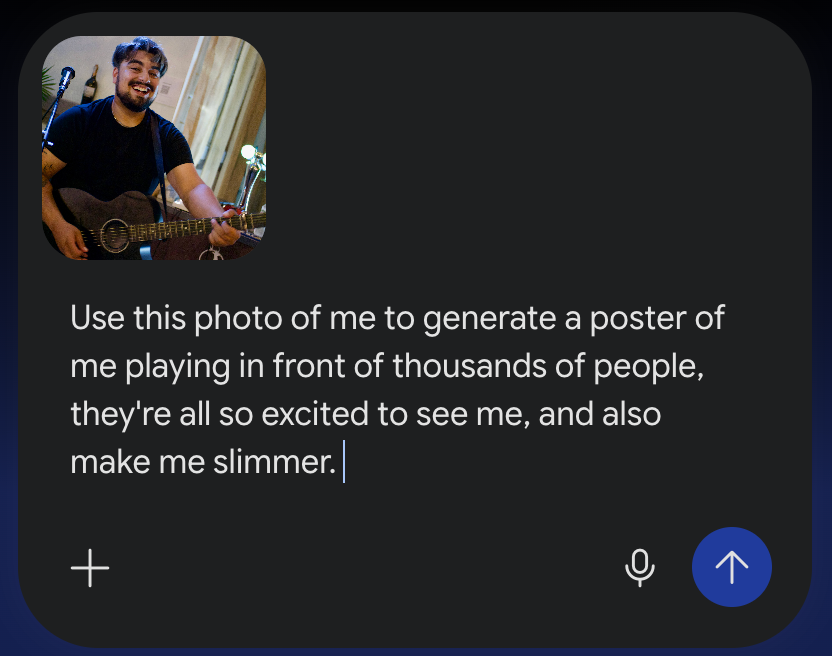
Have you ever bought a product from an ad with an obviously AI-generated image?
No?
So why are music venues and musicians using this technology as if it's any different for them?
Gig-posters and art covers are the window through which present, and potential fans get a sneak peak of your show, your style and your vibe. And you're letting a computer decide all of that for you?
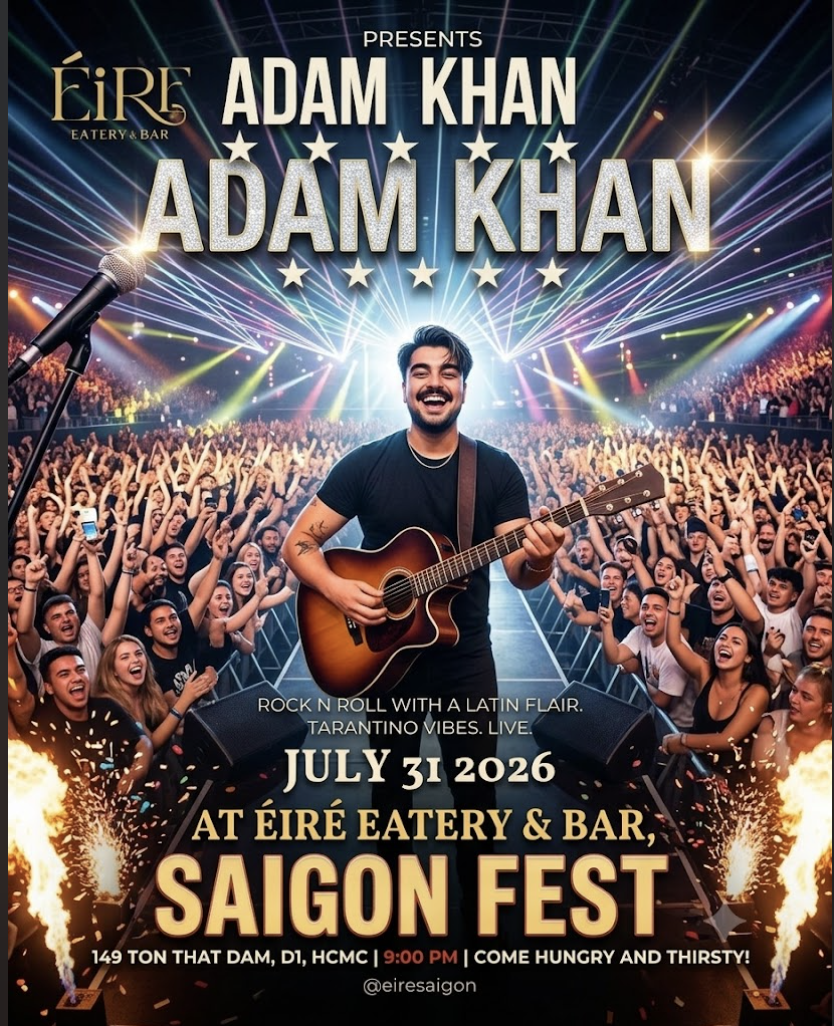

Photos: On the left, an AI monstrosity of the poster I designed on the right
The Role of AI Image Generation in Music
We've all seen them, it's impossible not to. AI-generated images and gig-posters are here to stay, complete with the monster-truck fonts and over-the-top poses.
But there's a special kind of risk that you, as a musician, are ignoring when you use AI to promote yourself, or your events. It's the tiny, but deafening confession that when it comes to your presentation... You just don't give a shit.
AI image generation in music is important because it shows us who doesn't care. Don't believe me? here's a study by NielsenIQ that analyses consumer perception of AI advertising. Spoilers: It's not good.
If you can't be bothered with promotion, which is step 1 of event coordination, then what guarantee does your audience have that the event will be what you promise?
And here's the larger issue: Using AI as a band-aid for bad marketing reveals a deeper, foundational mindset that affects all aspects of how a company, or a band, operates.
Let's be honest: Businesses, and crucially, business-owners, that use AI heavily also tend to:
- Cut corners: Not just in promotion, but other areas of the business as well.
- Have low respect for audience quality: Believe customers or audiences cannot tell the difference between quality and slop, whether that's in digital mediums, recording techniques or recipe ingredients.
- Prefer short-term transactions: Preferring a quick ticket sale over building a long-term community.
You Only AI What You Don't Respect
We, humans, only use AI for the things that we don't value. Ask an accountant what she thinks about offloading marketing tasks to Gemini, and she'll tell you all the savings she'd have by cutting the marketing department in half. But ask her about using AI for accounting and all of a sudden it can make mistakes, it's unreliable, and it forgets important context.
Ask a professional marathon runner what he thinks about writing children's books entirely with AI, and he'll tell you that it's great, because he can't draw, or write, or come up with creative premises. But ask him what he thinks about a man using a car to go from start to finish in a marathon and he'd probably have something to say about that.
We only use AI for the things that we don't value. But that doesn't mean that these tasks aren't important to the bigger picture of our operation.
A Confession of My Own
I myself was an early adopter, I generated the AI image of one of my first singles: She's No Saint. In hindsight, I'm not proud of it, but back in the very beginning it was different. Would I do it again, seeing the impact it has environmentally and socially in the scene? Definitely not. But it's done now, and it's part of my story as a musician and a creator.
But you know why I wouldn't do it again the most? Because it's a disservice to the sheer amount of work that went into actually creating the music. It was the third song I had ever written, it took me forever, and I was happy with where it was at. And I thought that I was being smart by using AI, but maybe there's a reason massive modern artists don't bother with it...
The solution to not relying on AI for visuals is just raw human creativity, and now more than ever, simplicity. Because AI, at least in 2026, loves creating posters for everything like it's an insurance comparison website.
Simplicity is the new Secret Weapon
I don't want to end this article on a bummer, I want to give you the tools so that, even if you're not a certified graphic designer, you can still create meaningful, and impactful posters that showcase who you are and what you do more effectively than a computer ever could.
💡 Tool for Band Leaders: Keep your promo links, band assets, and tech riders organized in one shared location instead of scrambling before every show. Grab the BandHub Command Center Template today
Check out these two posters:
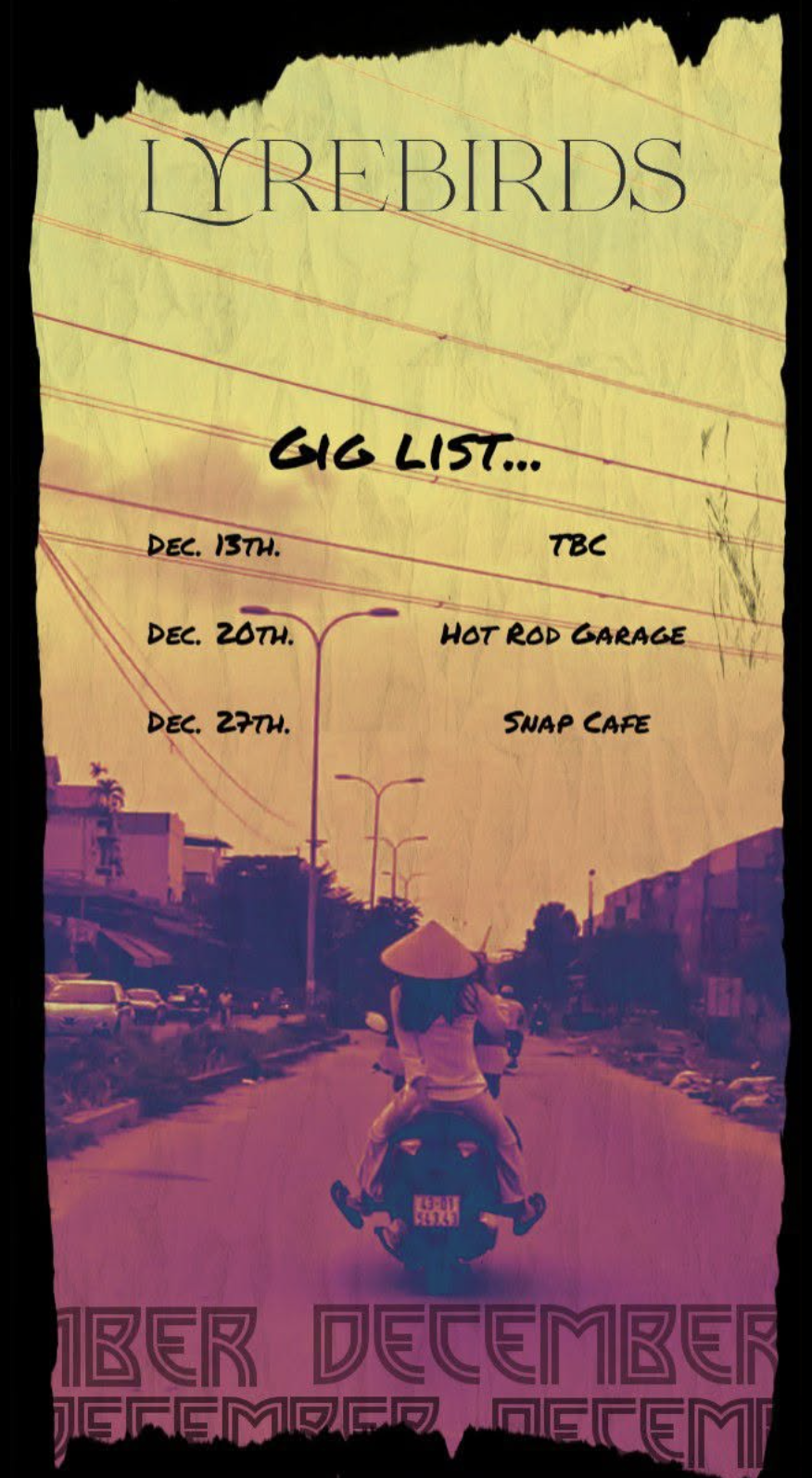
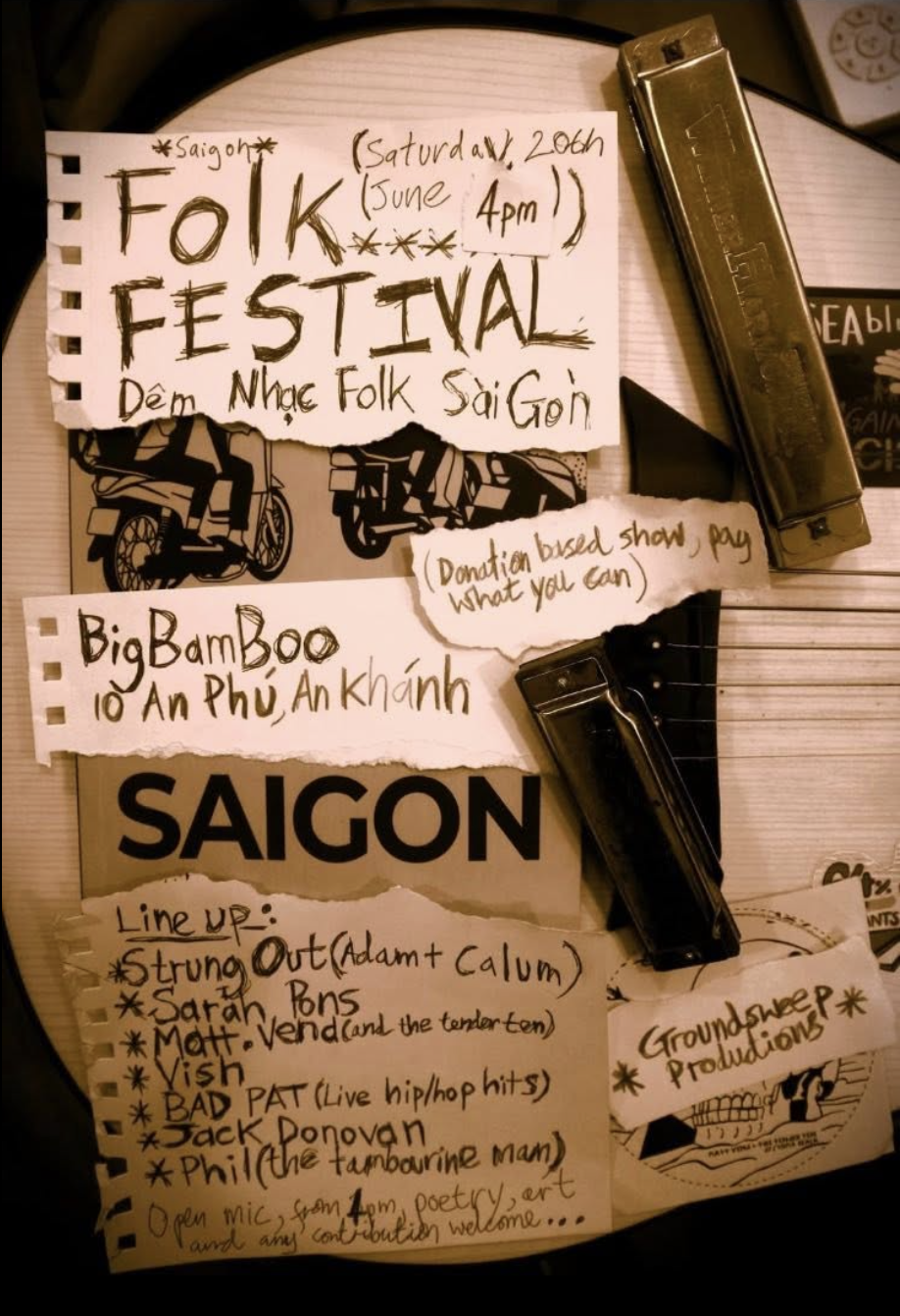
Photo: On the left: A gig-poster for The Lyrebirds, a local band here in Saigon. On the right: A gig-poster for the Saigon Folk Festival
I've told Edward, one of the members at the Lyrebirds, that his gig-posters are some of my favorites in Saigon (get an updated live music venue list of Saigon now for free HERE). Not only are they insanely simple, they convey what type of band the Lyrebirds are, I can see that they're alternative and creative right from the poster.
On the right we have the Saigon Folk Festival, with literal scribbles on paper on top of a guitar. Could it get simpler than that? And yet I know everything I need to know, I can see that this is an organic, experience-oriented, grassroots show.
You don't have to reinvent the wheel, you just need to make artistic choices. Not offload those choices to a computer.
I know for a fact I'll probably get some flak from my colleagues and partners, but it's something that bothers me deeply, because I don't want to see more musicians fall into the trap of mediocrity, and not understand how to get out.
Where do you draw the line between using AI as a tool vs. using it as a replacement for your artistic identity?