Looper Pedal vs Backing Tracks for Solo Live Gigging | Audience Perception, Setup & Rig

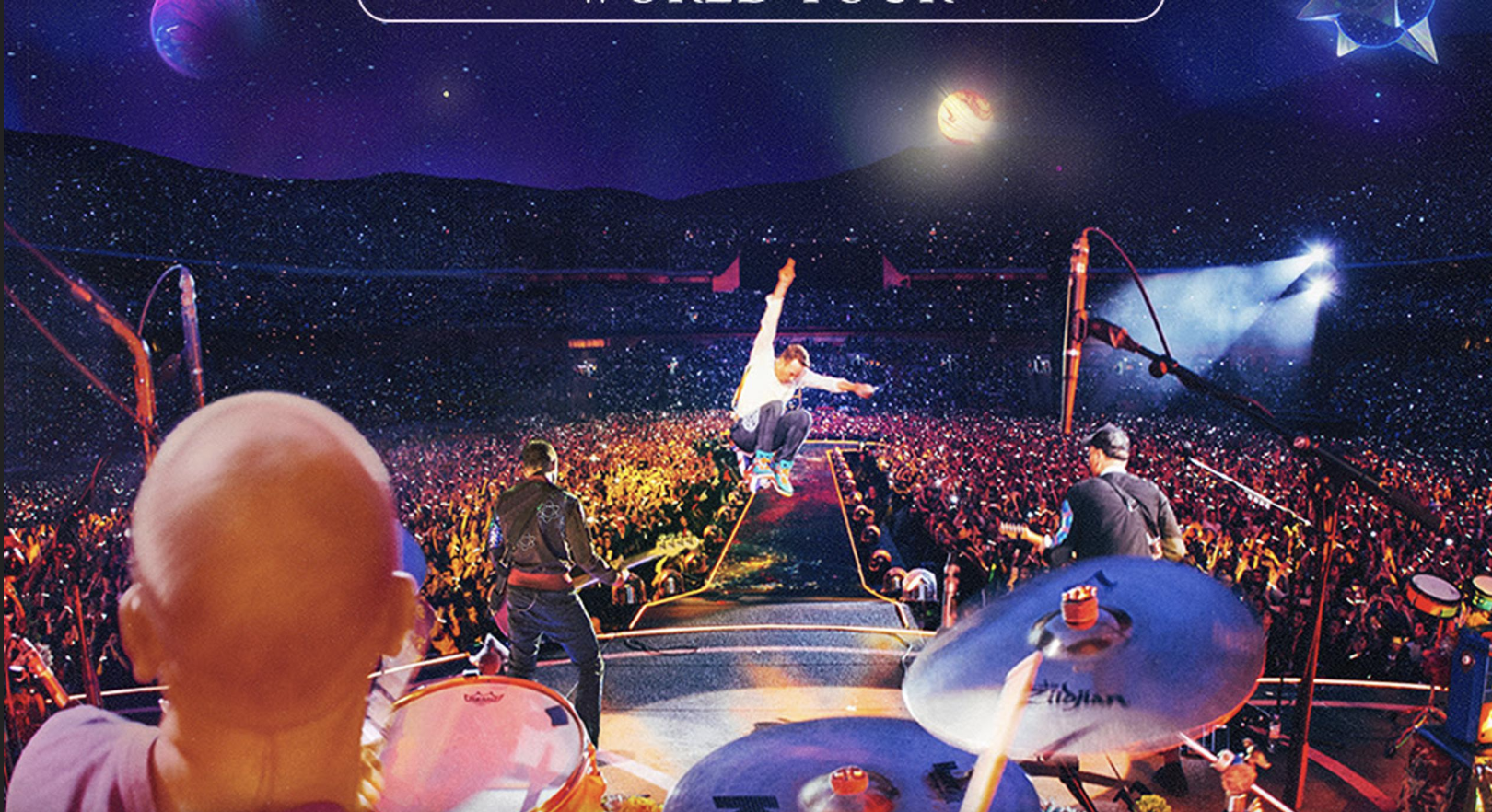
Think of any large act today, like Coldplay, Drake, Arctic Monkeys, or Rosalía, and ask yourself whether they use backing tracks when they perform in massive arenas all over the world. The likelihood that they're using them is way higher than not, even in genres you'd think don't call for it, like Metal and Funk.
Using backing tracks is still a contentious topic when discussing live music, especially among the older musicians among us who believe they defeat the purpose of a live show altogether. While I concede that backing tracks are routinely overused (I've seen bands going as far as including the parts that the supposed live musicians are playing in the tracks), objectors often ignore the colossal work that goes into creating them. And the fact that it helps smaller bands "sound" like a stadium band when they can't afford to hire a full brass section.
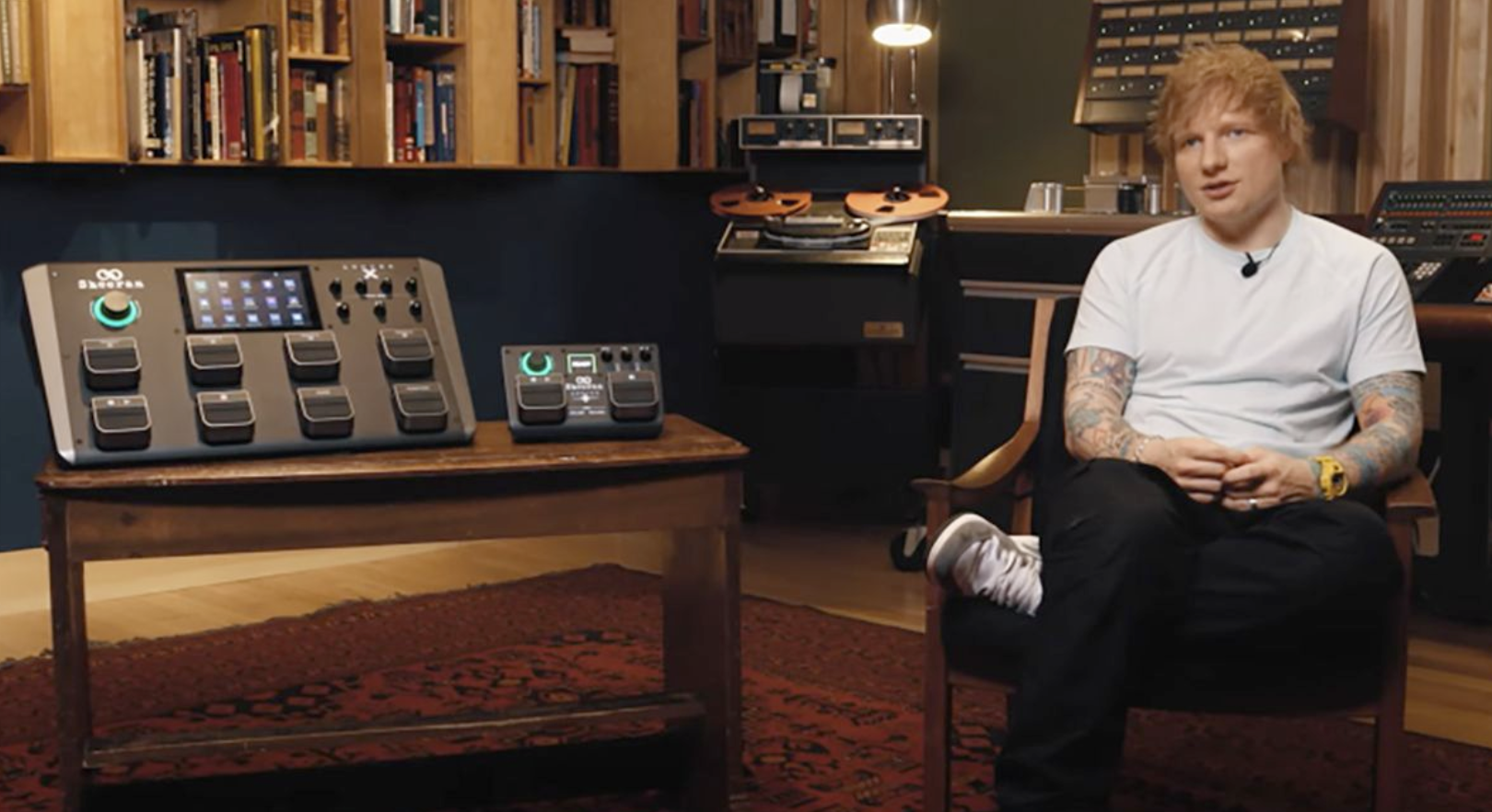
Some artists, like Ed Sheeran (until recently) or Tash Sultana use what's called a looper pedal. They record a short snippet in tempo and have it play over and over, and build out a full-sounding song out of thin air. They can then select what parts are sounding off and not, depending on the section of the song. When done right, it's truly mesmerizing, it allows a single musician to create sonic soundscapes far beyond what one guitar can do, while still actually playing the parts.
Looper pedals generally get more respect from musician communities amongst each other, because it still involves some level of raw musicality and skill to get right, you need flawless rhythm and concentration for it to sound right.
Both of these methods of expanding your sonic space have pros and cons, and are going to be better for different situations and formats. So today we're going to discuss the differences, not just in rig management and performance, but also how audiences feel about artists who use backing tracks, loop pedals, or simply play live.
Gear & Rig Setup of Each
The Backing Track Rig
This is a more complex set up that requires a Tablet or Laptop to play the tracks out of, an Audio Interface, DI or splitter cable to convert the signal from a file in your computer into something that can be plugged into a mixer, the cables, and finally, a Power bank, trust me on that last one.
You'll also need a digital mixer of some sort, that can feed the musicians one signal, and FOH another, because the musicians mix will have things like audio cues, the clicktrack for the drummer and even the banter topics in some cases.
The Looper Rig
Way simpler, you really only need your Multi-track looper (like a Boss RC-500 or any mainline multifx unit, ideally with a mix knob), the standard power supply and cables to go to and from your looping device.
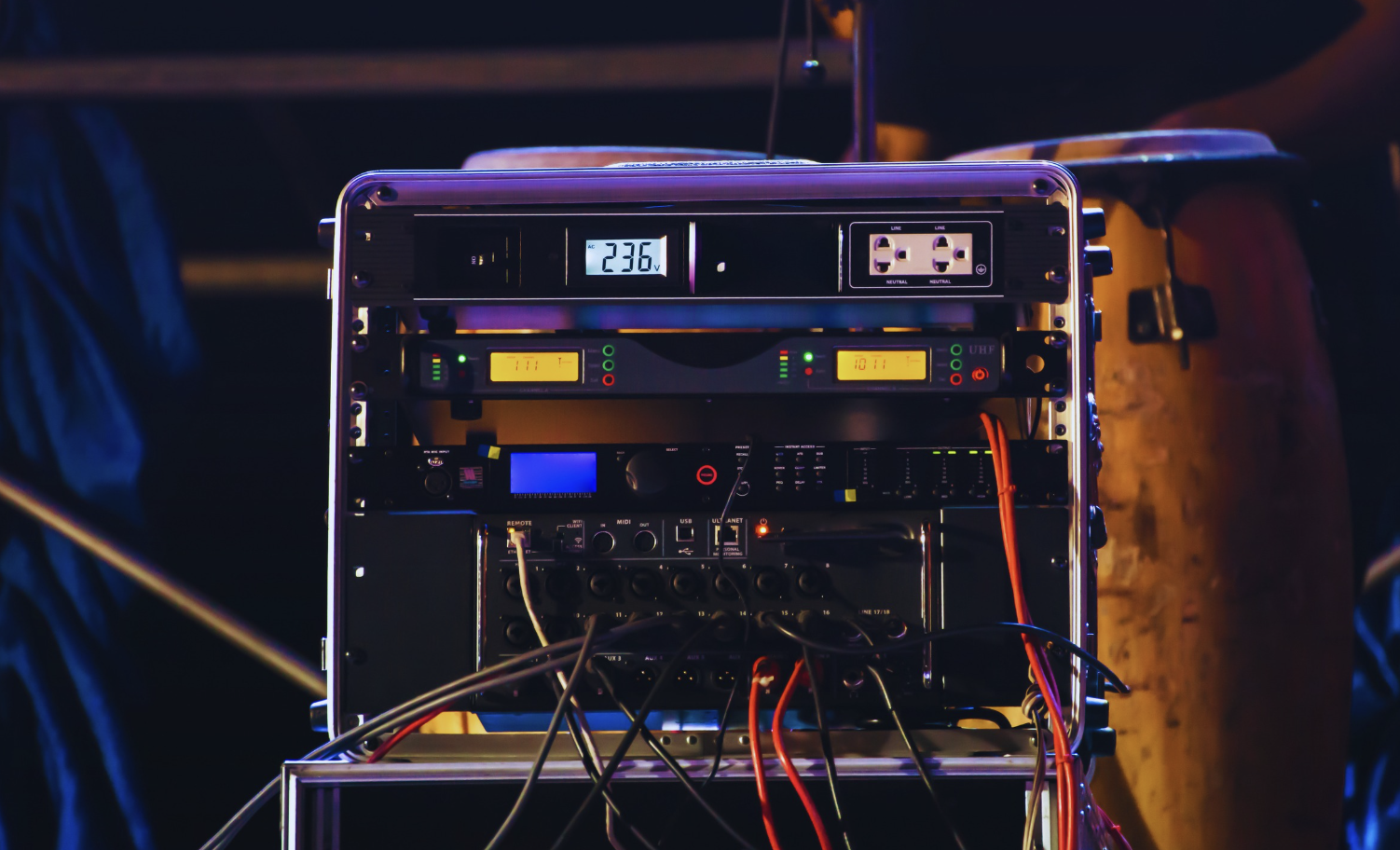
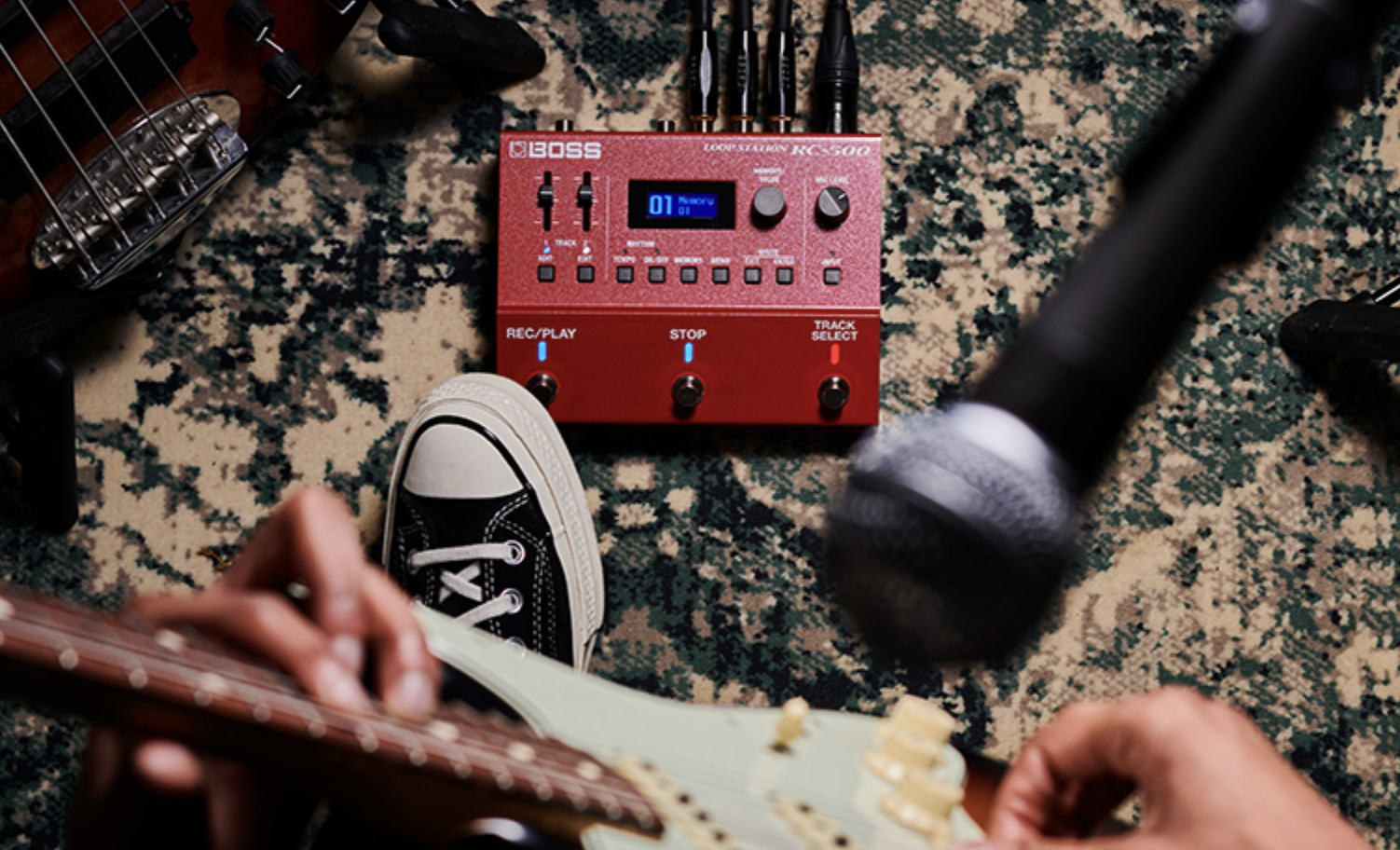
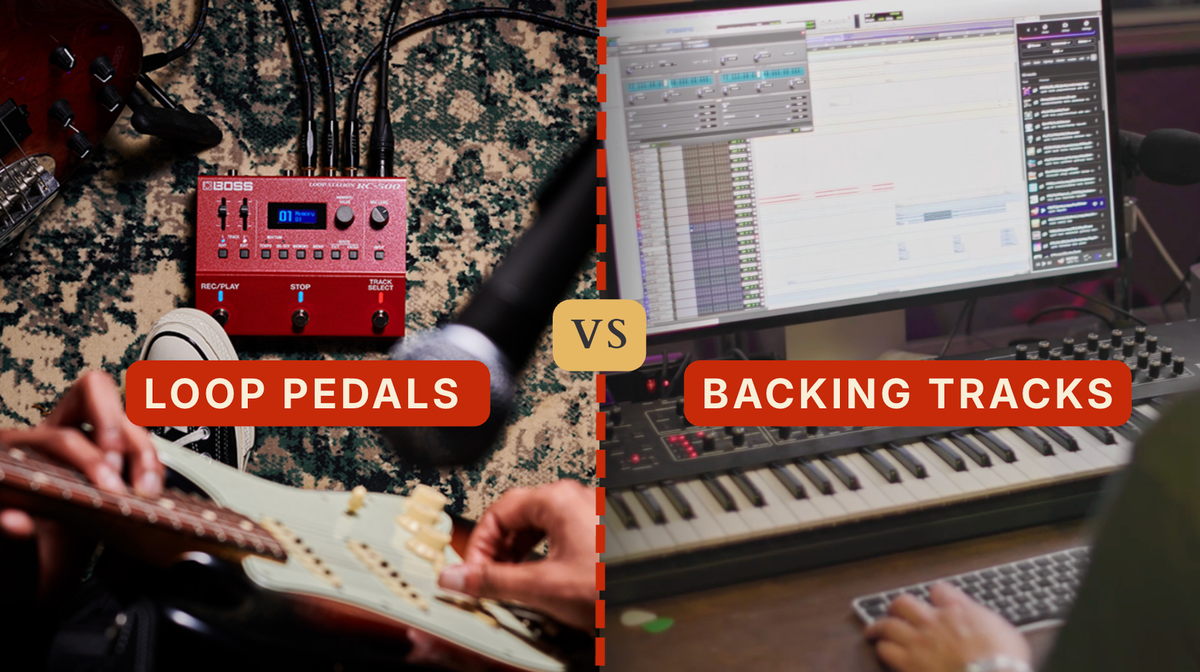
Photos: Left: A complex digital mixing rig, connected to a laptop which outputs the sound of the tracks with a click-track to the musicians, and the full backing tracks to FOH. Even in its simplest iterations, backing track rigs can get expensive quick. Right: Boss RC500 Looper pedal, substantially simpler to set up, and harder to get something wrong on.
Audience Perception
Backing Tracks: High Polish, Low Intimacy
The rule of thumb for when to use backing tracks is this: The bigger the show, the more likely the backing tracks will mix into the performance, rather than overtake it.
I do not recommend using them in small spaces where the audience is close up to you, as it will sound like you're doing karaoke more than performing live music.
Be warned: Very rarely will someone have an outright positive thing to say about artists using backing tracks, they will be either ambivalent or actively negative about it. This warning becomes even more dire if you don't have absolute confidence in the devices you're using to play the tracks.
Looper Pedals: High Skill Barrier, High Engagement
Loopers shine in smaller spaces, where the sound of a solo acoustic guitar over a long period of time can start to sound too repetitive, it's a great way to add dynamism and interest to an otherwise standard live set.
For larger shows, they're an interesting addition, though playing it with a band will be difficult, because it's tougher for other members to play along with the looped guitar or voice if they can't hear it crystal clear.
Audiences to this day still enjoy the sound of a looper being used in moderation.
The Gear Friction Points
Backing Track Pitfalls
- Connectivity issues such as glitches and cable issues, but also in bluetooth, though I never, ever recommend using bluetooth.
- Devices have a tendency to update mid-gig, so make sure the file is local and the device is not connected to the internet.
- The power bank should solve the battery drain issue that comes from playing a large file, though it's no guarantee.
- Small things, like the vibration of a kick-drum closing the lid of the computer and shutting down the entire backing track rig, can instantly destroy the experience for your audience.
- Requires lots of time to create, mix and compensate them for live use.
Looper Pitfalls
- Requires hours of training to get right, and if you get it wrong, you may have to start again.
- Balancing live loop levels against room acoustics.
- Can sound repetitive very quickly if used too much.
My Two Cents
Having performed extensively with backing tracks and multi-track loopers, nowadays I prefer just playing live, with no looper, nor backing tracks.
Developing new techniques on the guitar to take up more sonic space, like playing in different tunings and learning some Hendrix-ey embellishments make a guitar sound bigger than just playing chords on it. It's the easiest way to keep my rig simple and I feel that audiences appreciate when something is played live.
However both backing tracks and looping have their place in stage production:
- If I was playing a 5.000-cap venue, I'd definitely use backing tracks again to deliver dense, production heavy-arrangements.
- In small-scale lounge or cafe shows, I'd actually use loopers to build ambient soundscapes on a few, select songs.
Planning a low-profile rig? Read my breakdown on the best setups for small-scale gigs:
 Adam Khan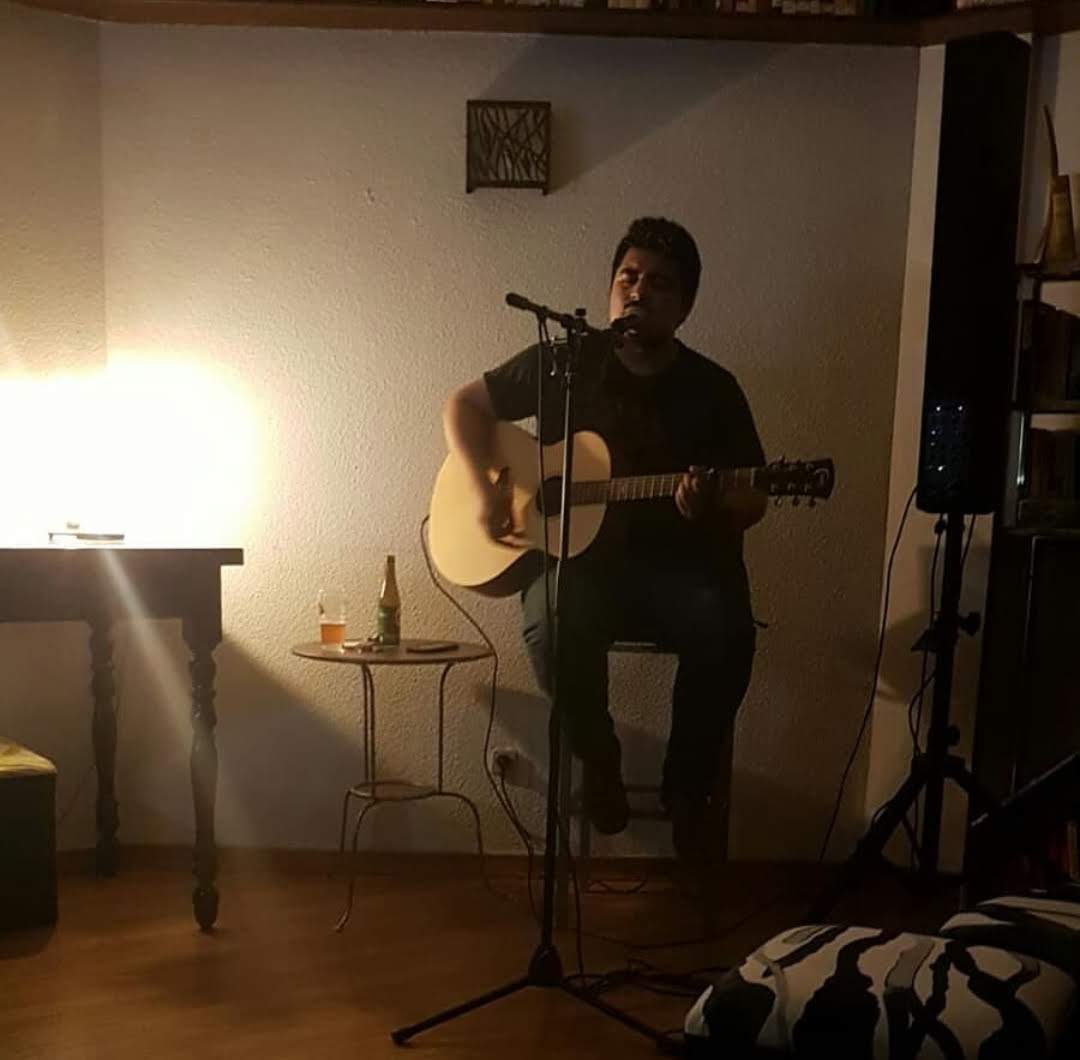
Gear mentioned: Boss RC-500 Loop Station and Ableton Live 12.