The Secret to Being Seen as a Professional Musician (Downloadable Template)

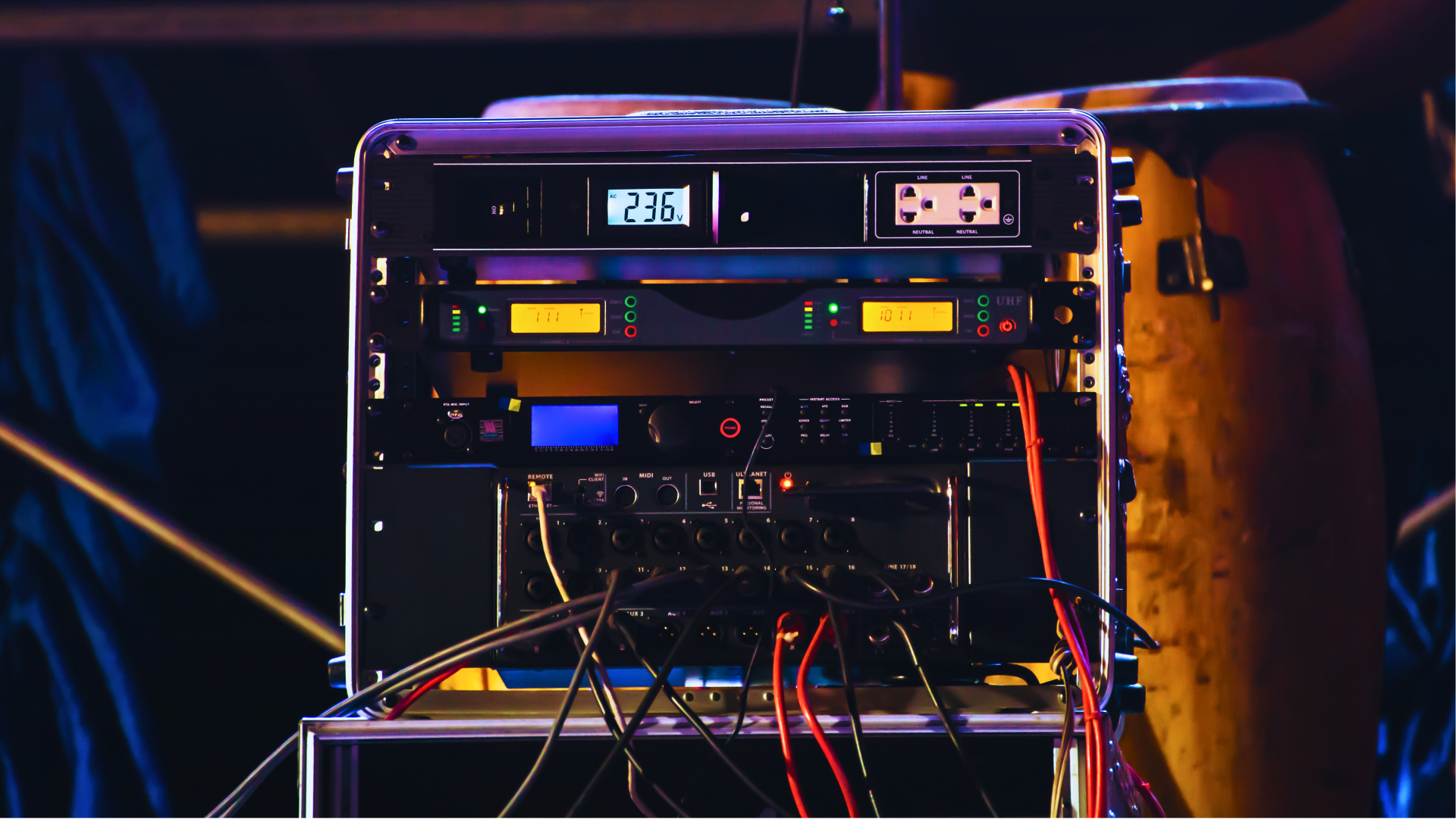
Let's be real, the music business is more about appearances than musicality. If you look like you play all the time, you'll probably play all the time, so presenting as someone who does so is essential for keeping your calendar booked.
Having certain documents ready to fire out at prospective venues is an incredibly easy way to move the needle, and nothing establishes your authority like a professional band technical rider template.
Why Every Artist Needs a Technical Rider for Live Music
What is a Technical Rider? A tech rider, or just rider as it's often called, is a PDF document where bands and artists compile all their own gear they'll use for a show and how they'll use it. This helps sound guys around the world by removing the guesswork from setup. When a venue engineer reads your rider, they should instantly know:
- Where each band-member will stand.
- The number of input lines and signals levels each will need.
- Collectively and individually how many power sockets the band needs.
- Specific hardware needs, such as vocal boom stands or monitor routing.
"But Adam!" - I hear you cry- "I'm super minimalist with my gear, I plug my guitar and mic straight into the mixer, do I really need a tech rider?" - Definitely. Not only because of the perception of professionalism that you gain, more on that below, but because a relaxed sound guy that knows exactly what's going to happen is a happy sound guy, and that's exactly what you want.
If you know the venue has a sound guy, sending a tech rider is a no-brainer. It will look good and make the sound guy's life easier, meaning you'll probably work there again.
Do I need a Tech Rider if there's no sound guy?
"But Adam!" - I hear you cry once more - "My gigs are nowhere near that big, I don't get a sound guy working with me in cafes and pubs" ... Remember what I said about appearances?
Cafe, restaurant and pub gigs where you often won't have a dedicated production crew are prime examples of a venue you must send your tech rider to. And the reason is this: You need to come across as the most professional, knowledgeable and experienced musician they've ever worked with, because even though they might not be paying you your rent, they absolutely will have people ask them who they can hire for their private events, and that is where your professional appearance will pay dividends.
The reason technical riders specifically work so well for looking professional is because 99% of musicians don't have them, yet it's something that helps immensely when it does find its audience, that being sound guys, who, by the way, hold enormous sway in who gets booked repeatedly at the venues they work at.
If you know the venue doesn't have a sound guy, sending a tech rider is still a great way to promote yourself covertly. You will stand out from 99% of musicians and be referenced as the most professional simply for having a sheet that illustrates how you plug your guitar into the mixer. Isn't that amazing?
Using your rider as a gear check-list
One of my favourite benefits of having a tech rider is that you can use it as a check-list for when you're packing up your gear to go to your show! I've not seen many people talk about this, but I use the list of gear in my tech rider as a checklist to make sure I have absolutely everything I need for the show and take that "did I leave anything at home?" driving anxiety out of the equation for good. This in itself is a good reason to have a tech rider, though I generally prefer to use a Google Keep check-list I've built that's more interactive, therefore easier to follow. More on that in a future article.
One document listing all the necessary gear for a show so you don't forget anything, does it get better than that?
Is it fun to make a tech rider? No, is it quick? Also no, but it doesn't need to be overtly complex. I've seen literal hand-drawn riders that probably took 30 minutes to make, that illustrated everything perfectly; and PDF files that were over-designed, making everything hard to understand. There is a science to clarity, I recommend looking online to see what a good one looks like. Try to see if you can understand with a quick glance what the band is trying to tell you, not necessarily how pretty the design is. This is a work document, not the graphic design awards.

So what have we learned today?
- We've learned that having a tech rider is an incredibly quick, easy, and most importantly FREE way of boosting your professional perception in the scene.
- Whether a venue has a sound guy or not, sending a rider is always going to be the right move.
- Using your rider as a check-list will completely remove anxiety from the equation, letting you focus on delighting your audience.
NEXT: Tired of communicating with your band-mates as if you're herding sheep? Check out the frictionless solution helping bands all over the world:
So you've booked that small-scale gig, congrats! What's the best set up for tight spaces?
 Adam Khan